What Paver Sealing Does (and Why Florida Pavers Need It)
Paver sealing locks color, stabilizes joint sand, and stops weeds. In Florida UV and rain it's near-essential maintenance.
You laid pavers on the driveway, pool deck, or walkway in Florida and are wondering whether sealing is actually necessary. The short answer: in SWFL UV and rain, sealing extends paver life by years and dramatically improves appearance. Here’s exactly what sealing does and why it matters here.
What Sealer Actually Does
A paver sealer is a clear (or color-tinted) liquid applied to the paver surface that penetrates the top few millimeters and forms a protective barrier. The barrier does four things:
- Blocks UV penetration — slows pigment fade from intense sun
- Resists water absorption — pavers shed water rather than absorbing it
- Stabilizes joint sand — when paired with polymeric sand, locks the joints
- Prevents staining — oil, leaves, and biological matter sit on the surface instead of absorbing
The sealer doesn’t change the paver structure. It creates a wear layer that gets sacrificed instead of the paver itself.
Why Florida Pavers Need It More
Unsealed pavers in northern states often look acceptable for 8-12 years. In SWFL, the same pavers show significant aging in 3-5 years because:
- UV intensity is 30% higher than mid-Atlantic averages — pigment fade accelerates
- Daily summer rain drives joint sand out of the joints faster
- Year-round growing season lets weeds germinate without winter pause
- Salt air (coastal homes) creates additional surface stress
- Irrigation overspray adds chemistry to the wear cycle
The combination means sealing moves from “optional cosmetic upgrade” to “core maintenance” in SWFL.
What Sealed Pavers Look Like
Two finish options:
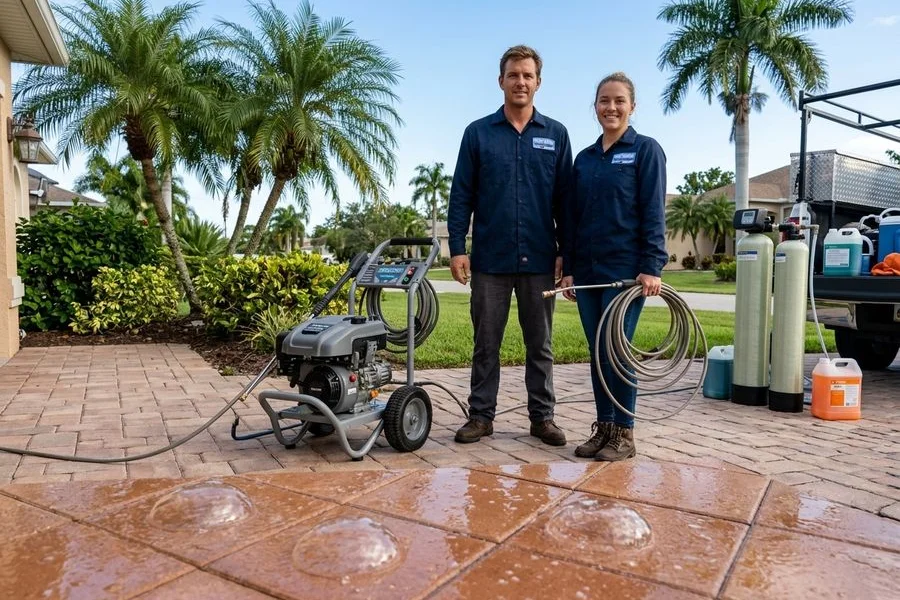
- Wet-look — sealer adds slight gloss and intensifies paver color (terracotta becomes rich, greys deepen). Most dramatic visual improvement.
- Matte — sealer preserves natural paver appearance without gloss. Color slightly intensified but the surface looks unchanged.
Both protect equally. The choice is aesthetic. See Wet Look vs Matte Paver Sealer for the full comparison.
What Unsealed Pavers Look Like After 3-5 Years
Without sealing, SWFL pavers typically show:
- Significant color fade (especially red, tan, and brown pigments)
- Weed growth in joints (where sand has washed out)
- White efflorescence haze across the surface
- Oil and leaf staining that won’t wash out
- Joint sand washed away after heavy rains
- Occasional paver shift in high-traffic areas
The cumulative aging is dramatic compared to sealed pavers at the same age.
Sealer Lifespan in SWFL
Depending on type:
- Water-based sealer: 2-3 years
- Solvent-based sealer: 3-5 years
- Color-tint sealer: 2-3 years (same chemistry, plus pigment)
When you see water no longer beading on the surface, sealer is wearing. Time to clean, refresh joint sand, and reseal.
The Full Maintenance Cycle
A properly maintained SWFL paver installation looks like this:
- Year 0: Paver installation. Wait 30-60 days for initial cure.
- Month 1-2: Initial cleaning and first seal (clean-sand-seal).
- Annual: Cleaning to maintain appearance.
- Year 2-5 (sealer-dependent): Reseal (clean-sand-seal cycle).
- Repeat indefinitely — properly maintained pavers can last 30+ years.
Compared to unsealed pavers needing replacement at 7-10 years, the maintenance cycle is dramatically more cost-effective.
Is Sealing Worth It?
The math:
- Initial seal cost: $1-3/sq ft (clean+sand+seal)
- Reseal cost (every 2-5 years): $1-3/sq ft
- Paver replacement cost: $15-25/sq ft
Even with multiple reseal cycles, you’ll spend a small fraction of replacement cost. And the appearance during those years is significantly better.
For a typical 500 sq ft Cape Coral driveway:
- 10 years of seal cycles: ~$3,000-$5,000 total
- 10 years of no sealing, then replacement: $7,500-$12,500 + worse appearance
Sealing pays. The decision is when and which type, not whether.
Get a free paver sealing quote and we’ll walk the surface, recommend a sealer type, and quote line-itemed costs. See Paver Cleaning & Sealing for the full service.
Related Service
Paver Cleaning & Sealing →Multi-step clean-sand-seal process restores faded pavers, stabilizes joints with polymeric sand, and locks the finish with a UV-blocking sealer.