Why Polymeric Sand Is the Step Most Paver Jobs Skip
Polymeric sand activates with water to lock paver joints, stop shifting, and prevent weeds. Here's the proper application.
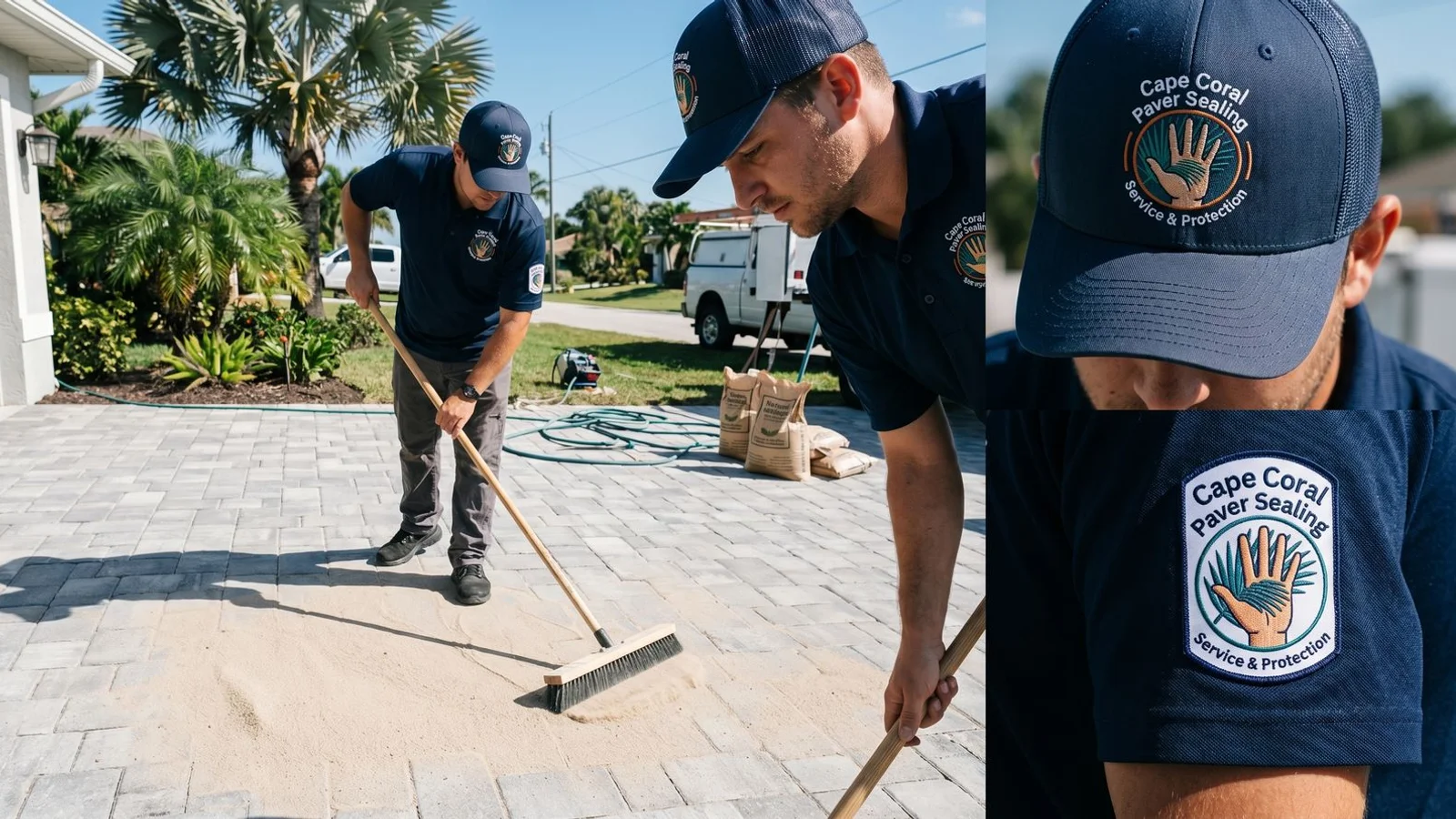
Polymeric sand is the step most paver maintenance jobs skip. Most “reseal” services just clean and apply sealer. The pavers look better for a year, then the joints fail, weeds grow, and pavers start shifting. The missing step is fresh polymeric sand in the joints — without it, sealer alone doesn’t last.
What Polymeric Sand Is
Polymeric sand is fine silica or quartz sand mixed with polymer binders (typically silica-based polymers or modified silanes). The binders are inert when dry but activate when water touches them. Once activated, the polymer locks the sand grains together, forming a hardened but flexible joint material.
The result is a joint that:
- Resists wash-out from rain
- Blocks weed seed germination
- Prevents paver shift from foot traffic and vehicle weight
- Maintains the visual line between pavers
How It Differs From Regular Sand
Plain mason sand or play sand has no binder. In a paver joint:
- Rain washes it out within months
- Wind erodes the surface
- Weeds germinate freely through the sand
- Pavers shift as joints empty
In SWFL’s heavy rainfall and humidity, regular sand fails fast. Polymeric is the only joint sand that maintains structure under SWFL conditions.
The Proper Installation Process
Polymeric sand only works when installed correctly. Skipping any step compromises the result.
- Surface must be clean — pressure wash or surface clean removes old sand and debris from joints
- Pavers must be dry — moisture in the joint before sand application causes early activation and surface haze
- Sweep sand into joints — fully fill every joint to the top
- Blow off excess — leaf blower or air to remove sand from the paver face (any residue cures in place and looks bad)
- Light water activation — fine mist, not flood. Heavy water washes sand out before it sets
- Cure 24-48 hours — full hardening before traffic
Steps 4 and 5 are where most DIY jobs fail. Too much sand left on the paver face creates a permanent white haze. Too much water washes out the sand before it sets.
Why This Matters for Sealing
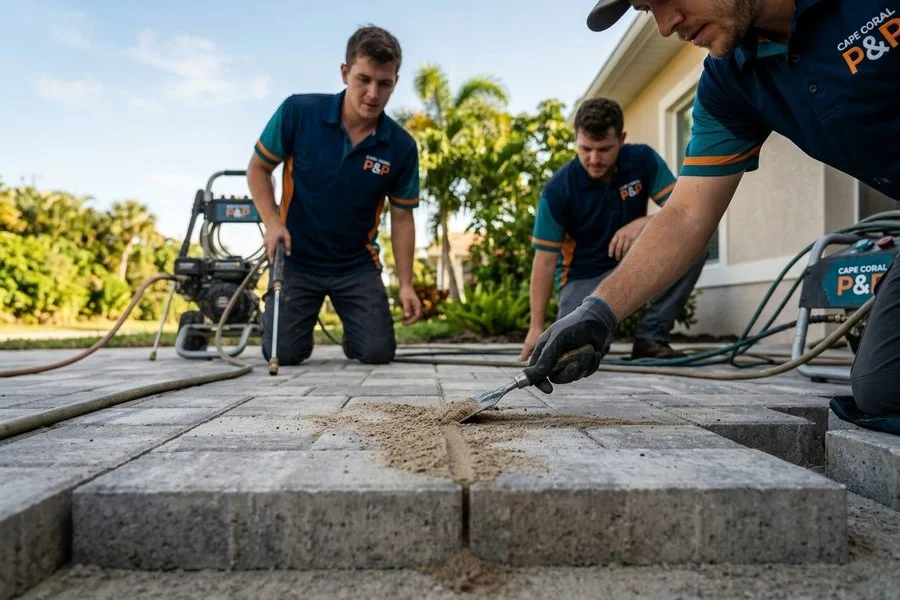
Polymeric sand is the foundation that sealer protects. If you seal pavers without refreshing the joint sand:
- Sealer creates a protective surface but joints continue to fail
- Weeds still germinate through worn joints
- Pavers still shift in heavy rain
- The sealer life appears short because the underlying problem (joint failure) is visible
A proper clean-sand-seal cycle addresses both surface and joints simultaneously. That’s why our Paver Cleaning & Sealing is a 3-step process, not just clean-and-seal.
When to Refresh Polymeric Sand
Joint sand needs refresh when:
- Joints visibly sparse or empty
- Weeds appearing in joints
- Surface uneven (pavers starting to shift)
- Time for reseal cycle (always refresh sand at reseal)
A typical SWFL maintenance cadence:
- Year 0-1: Initial installation with polymeric sand
- Year 2-3: Cleaning maintenance, light sand top-off if needed
- Year 3-5 (sealer-dependent): Full clean-sand-seal cycle with fresh sand
Common Polymeric Sand Problems
White haze on pavers — caused by sand residue left on paver face during installation. Difficult to remove once cured. Prevention: thorough blow-off before water activation.
Soft / crumbly joints — caused by insufficient water activation or wrong mix ratio. Fix: re-application with proper protocol.
Discolored sand — environmental dirt working into the sand surface. Cosmetic only, doesn’t affect joint integrity. Regular cleaning maintains appearance.
Cracking joints — flexibility limit exceeded. Usually indicates substrate movement (paver bed settling). Beyond polymeric sand’s scope — needs paver re-bedding.
Match the Sand to the Pavers
Sand color matters. We carry:
- Tan / beige — most common, matches standard paver colors
- Grey — for slate, charcoal, or modern grey pavers
- Brown / dark tan — for darker red and brown paver palettes
We match the sand color to your pavers during the quote walk.
The Step Most Operators Skip
In our 20 years of SWFL paver work, fresh polymeric sand is the differentiator that separates a 2-year reseal job from a 5-year reseal job. Operators who skip the sand refresh return your call sooner — that’s the math.
Get a free paver quote and we’ll line-item the polymeric sand step. See Paver Cleaning & Sealing for the full 3-step method.
Related Service
Paver Cleaning & Sealing →Multi-step clean-sand-seal process restores faded pavers, stabilizes joints with polymeric sand, and locks the finish with a UV-blocking sealer.