Water-Based or Solvent-Based Paver Sealer? Florida Comparison
Water-based: easy, eco-friendly, 2-3 years. Solvent: deeper, 4-5 years. Here's the SWFL trade-off.
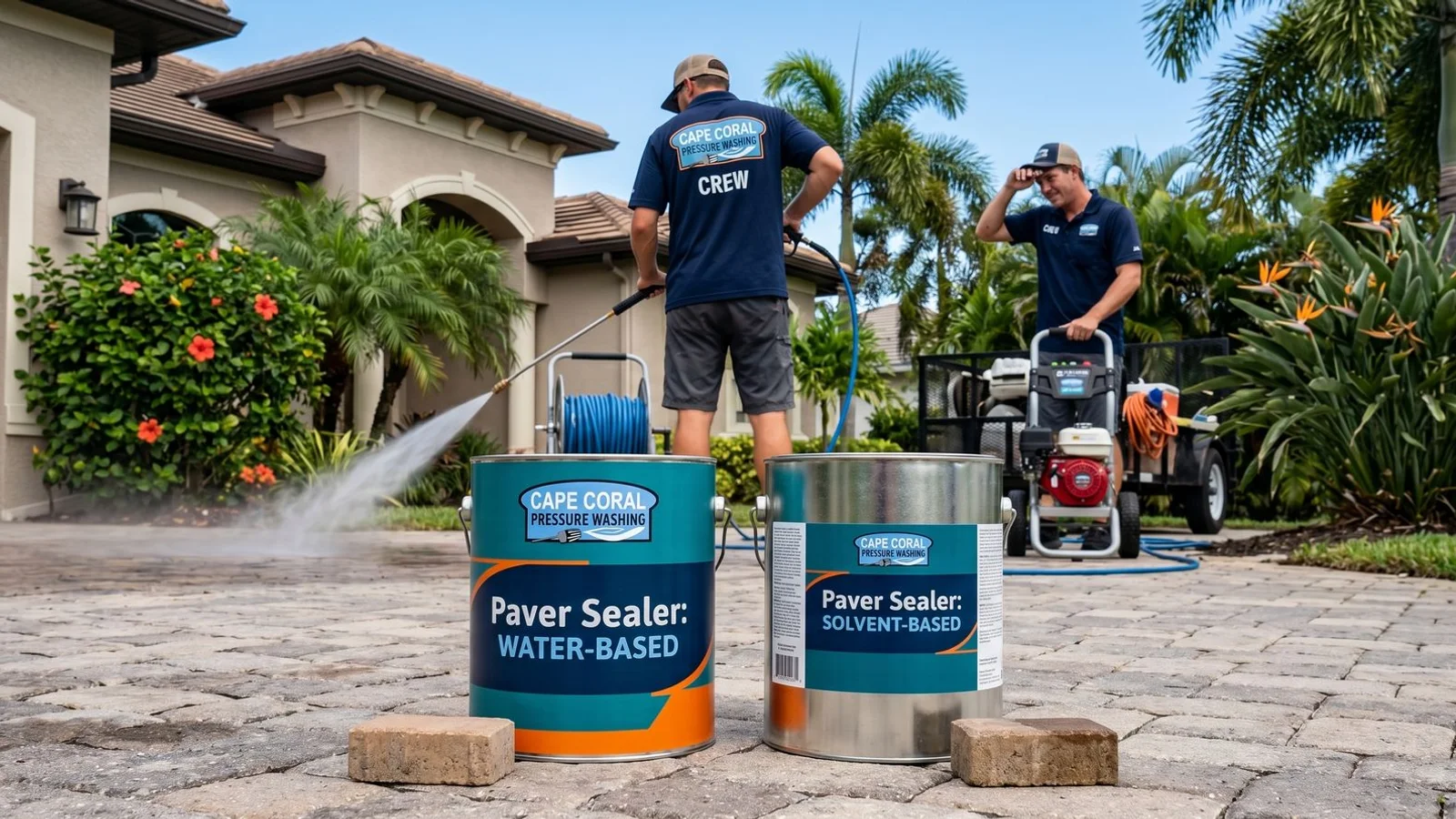
You’re sealing pavers and the operator quoted two options: water-based or solvent-based. The decision affects how long the sealer lasts, how much it costs, what it smells like during application, and how often you’ll need to reseal. Here’s the real comparison for SWFL.
What Each Sealer Is
Water-based acrylic sealer: acrylic polymers suspended in water. The water evaporates after application, leaving the polymer film on and partially into the paver surface.
Solvent-based acrylic sealer: acrylic polymers dissolved in a solvent (typically xylene or naphtha). The solvent penetrates deeper into the paver before evaporating, leaving the polymer film deeper in the substrate.
The active polymer is similar in both. The difference is the carrier — water vs solvent — and that difference affects penetration, durability, and application.
Penetration Depth
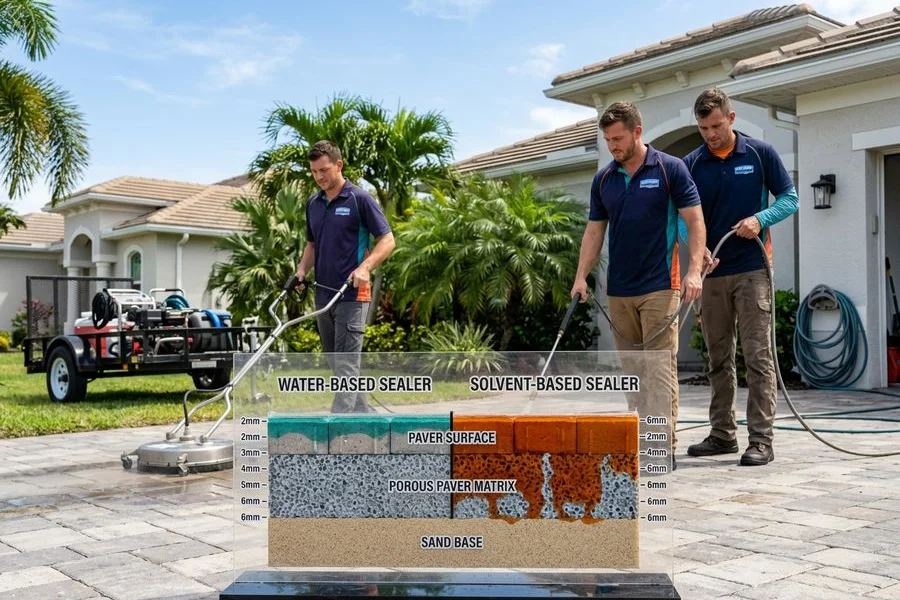
Solvent goes deeper. Typical penetration:
- Water-based: 1-2mm into the paver surface
- Solvent-based: 3-5mm into the paver surface
Deeper penetration means the sealer is more protected from surface wear. UV degrades sealer from the top down — solvent-based sealer has more “depth” to lose before the protection is gone.
This is the main reason solvent-based sealer lasts 1-2 years longer than water-based in SWFL.
Lifespan in SWFL
- Water-based: 2-3 years
- Solvent-based: 3-5 years
The longer life of solvent-based partially offsets the higher upfront cost. See How Often to Seal Pavers in Florida for full cadence details.
Application & Odor
Water-based:
- Mild odor (similar to latex paint)
- Easy water cleanup
- 24-hour cure to foot traffic
- Easier DIY (not that we recommend DIY sealing)
Solvent-based:
- Strong odor during application (similar to fresh-paint smell)
- Requires solvent for cleanup
- 24-48 hour cure
- Better in dry conditions
The odor is the main objection to solvent-based, especially in summer when windows are open and HOA neighbors are close.
Cost Comparison
Solvent-based costs more upfront:
- Water-based: $1.20-$2.40 per sq ft installed
- Solvent-based: $1.60-$3.00 per sq ft installed
For a 600 sq ft Cape Coral driveway:
- Water-based: $720-$1,440 per cycle
- Solvent-based: $960-$1,800 per cycle
Solvent is roughly 20-25% more per cycle but lasts roughly 50% longer. Annualized cost is similar; solvent edges ahead slightly.
Environmental Considerations
Water-based has the better environmental profile:
- Lower VOC emissions
- Water cleanup vs solvent cleanup
- Less environmental impact during application
For waterfront properties (canal, Caloosahatchee), water-based is the standard choice due to runoff considerations.
Solvent-based can be applied responsibly with containment and ventilation, but the environmental considerations push some homeowners toward water-based.
HOA Considerations
Some SWFL HOAs:
- Allow only water-based application in summer (odor complaints)
- Restrict solvent application within X feet of pool areas
- Require contractor licensing for solvent application
- Have no restrictions (most common)
Check your HOA guidelines before quoting. Most cape Coral and SWFL HOAs allow either.
When to Choose Water-Based
- Pool decks (slip-safe, low odor near family use)
- HOA-restricted properties
- Waterfront homes (canal, river, gulf)
- Quick turnaround needed (faster cure)
- Lower budget priority
- Plan to reseal more frequently anyway
When to Choose Solvent-Based
- Driveway with no nearby pool/water
- Maximum lifespan priority
- Restoration jobs (wet-look effect more dramatic)
- Larger budget for longer-term value
- HOA permits solvent application
The Common SWFL Choice
For Cape Coral driveways: roughly 60/40 split toward water-based for the easier application, lower odor, and faster cure. Restoration jobs and large premium driveways lean toward solvent-based for the visual impact and longer life.
For pool decks: 90% water-based for the slip safety and low odor near pool use.
Get a Sealer Recommendation
During the quote walk, we recommend a specific sealer based on your paver type, location (pool vs driveway), HOA requirements, and budget. Free quote here — we’ll explain the choice for your specific situation. See Paver Cleaning & Sealing for the full method.
Related Service
Paver Cleaning & Sealing →Multi-step clean-sand-seal process restores faded pavers, stabilizes joints with polymeric sand, and locks the finish with a UV-blocking sealer.