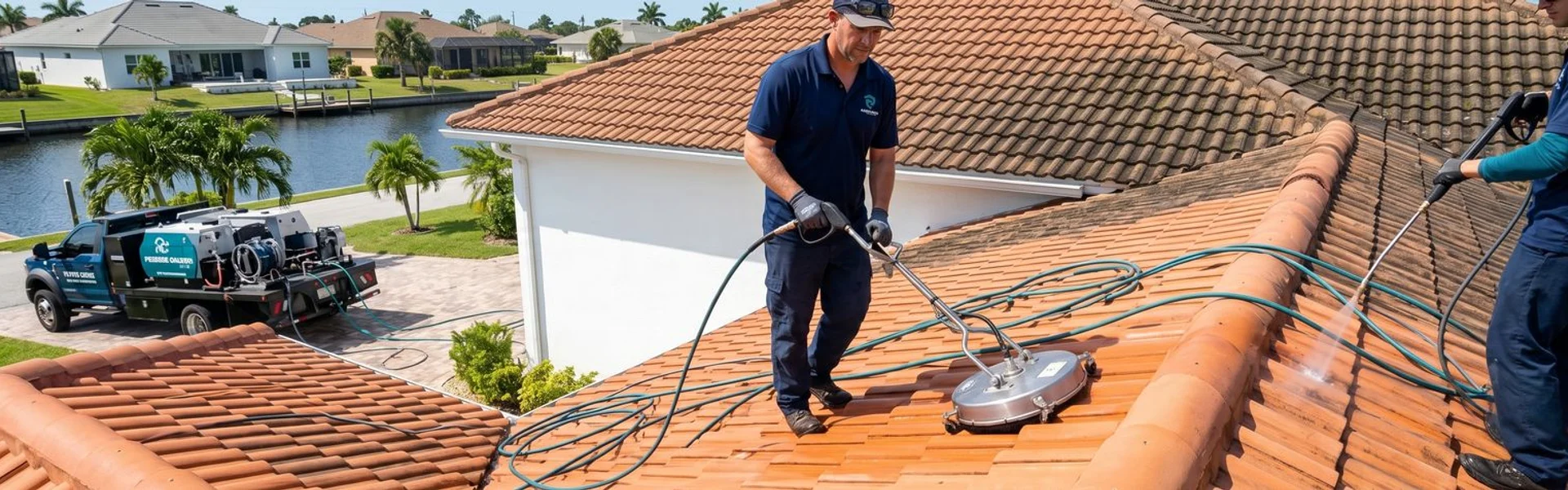
Why Soft Wash Beats Pressure Wash on Roofs (Every Time)
Pressure washing roofs strips granules and cracks tile. Soft wash is the ARMA-recommended method. Here's the damage data.
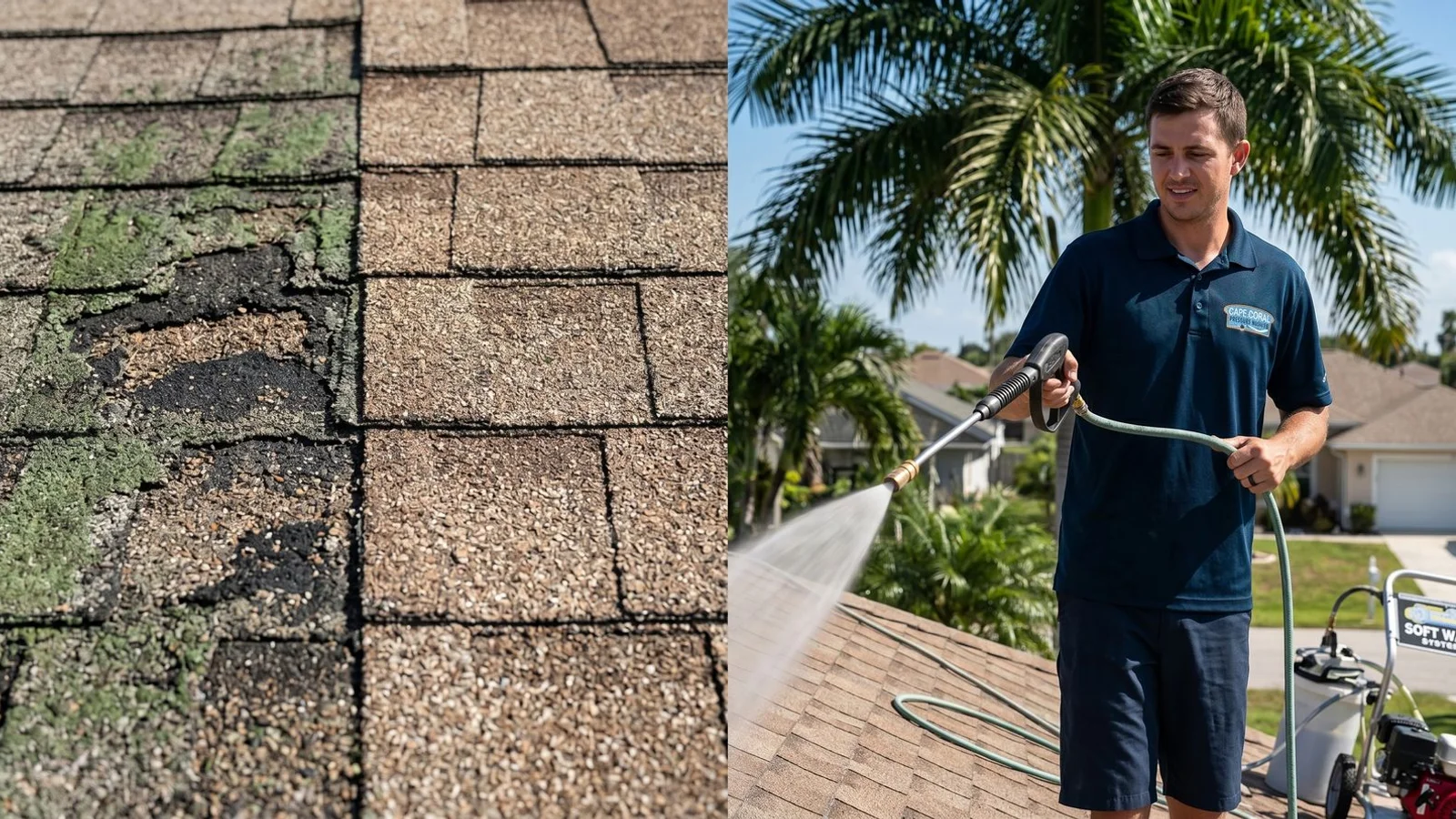
You’ve called for roof cleaning quotes and gotten conflicting advice. One operator says “we use soft wash.” Another says “we pressure wash everything.” A third says “doesn’t matter, both work fine.” Here’s the data on what actually happens to your roof under each method.
The Manufacturer Position
The Asphalt Roofing Manufacturers Association (ARMA) — the industry body whose standards most shingle manufacturers reference in their warranties — explicitly recommends low-pressure chemistry-based cleaning. Their position document is unambiguous:
“ARMA recommends using a low-pressure rinse using a 50/50 mix of laundry strength chlorine bleach and water with the addition of a surfactant… Direct high-pressure water spray and pressure washing should NOT be used.”
That’s the standard. Soft wash is the manufacturer-approved method for asphalt shingles. Pressure washing is explicitly contraindicated.
What High Pressure Does to Shingles
A 3,000-4,000 PSI pressure wash blasts the mineral granules off asphalt shingles. The granules are bonded to the asphalt with a thin adhesive layer designed for normal weather exposure — not concentrated force.
Damage progression:
- Surface granule loss — visible immediately as bald patches
- Asphalt exposure — the underlying asphalt is now UV-exposed
- Accelerated UV degradation — typically 3-5 years of life lost
- Faster failure — at the end, the shingle cracks and lifts earlier than rated
The damage is permanent. Granules don’t grow back. The warranty exclusion typically appears in the manufacturer claims process — they ask for photos and reject claims showing granule loss patterns consistent with pressure damage.
What High Pressure Does to Tile
Tile damage from pressure washing comes from two sources:
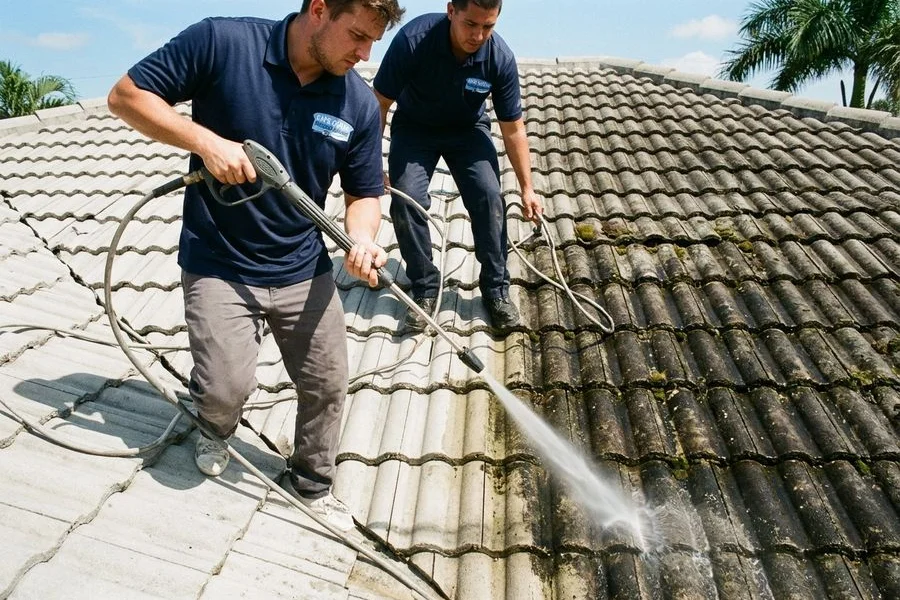
- The pressure itself — high PSI directed at the tile surface erodes the sand-cast coloring and the porous surface that holds pigment in place
- Foot traffic — operators walking the roof to reach areas with the pressure wand crack tile, especially barrel tile which is hollow
Cracked tiles are visible damage. A typical SWFL tile replacement runs $25-75 per tile, plus labor and color matching (often impossible on older roofs). A pressure-cleaning job that cracks 10-15 tiles can outpace the original cleaning cost in damages.
What Soft Wash Does Differently
Soft wash uses chemistry to kill the organism. Specifically:
- Sodium hypochlorite at ARMA-aligned dilution
- Surfactants to penetrate the algae base layer
- Biocide for residual kill
- Low-pressure rinse (under 500 PSI)
The chemistry penetrates the biological growth and kills it at the cellular level. Pressure washing only rinses the visible surface — leaving the spores alive in the substrate, which is why pressure-washed roofs re-stain within 6-12 months while soft-washed roofs hold for 2-3 years.
The Real Comparison
| Factor | Pressure Wash | Soft Wash |
|---|---|---|
| ARMA recommendation | Explicitly against | Explicitly recommended |
| Warranty impact | Typically voids | Maintains warranty |
| Granule loss | Significant | None |
| Tile cracking risk | High when roof walked | Minimal (no walking) |
| Algae return | 6-12 months | 24-36 months |
| Roof life impact | -3 to -5 years per cycle | Extends life |
| Cost | Slightly cheaper short-term | Slightly higher short-term |
| 5-year total cost | Higher (re-cleanings + lost life) | Lower |
Why Some Operators Still Pressure Wash Roofs
Three honest reasons:
- Equipment cost — soft wash systems with telescoping wands cost $5,000-$15,000. A residential pressure washer is $300-$1,500. Some operators haven’t invested.
- Speed — pressure washing is faster per visit (no dwell time). Higher throughput, more revenue per day.
- Customer education gap — many homeowners don’t know to ask, so the operator delivers what’s easier.
None of those reasons benefit you as the homeowner. The first time you have to replace the roof 5 years early, the pressure washing “savings” cost you $20,000+.
What to Ask Your Operator
Filter quotes with these questions:
- What’s the PSI you’ll use on my roof? (Right answer: under 500 PSI)
- Will you be walking the roof during cleaning? (Right answer for tile: no, minimal at most)
- What chemistry do you use, and is it ARMA-aligned? (Right answer: yes, with specifics)
- What’s the dwell time before rinse? (Right answer: 5-15 minutes)
An operator who can’t answer or hedges on these is the operator whose pressure wash will damage your roof.
Our Method
We use Soft Wash Roof Cleaning exclusively on all SWFL roofs — shingle, tile, and metal. The method, chemistry, and pricing are on the service page. For a free quote tailored to your roof type, contact us and we’ll line-item the method choice for your specific substrate.
Related Service
Soft Wash Roof Cleaning →Low-pressure soft wash treatment that lifts black algae streaks, lichen, and biological growth without damaging tile, shingle, or metal roofs.