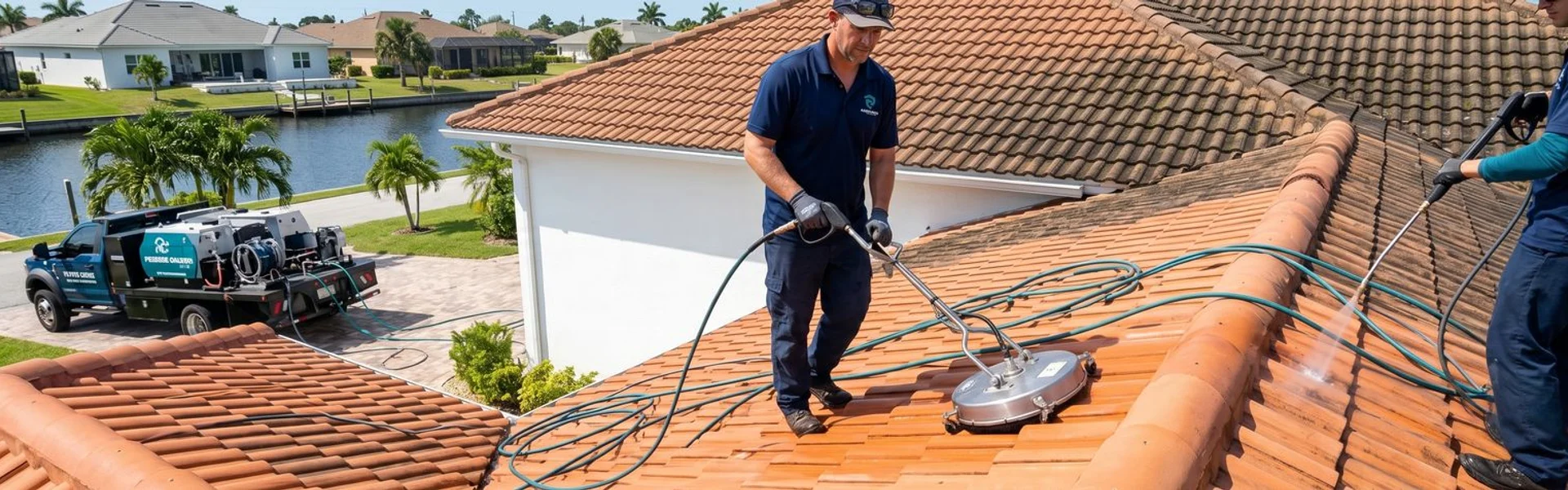
Soft Wash Method for Tile, Shingle, and Metal Roofs
Each SWFL roof substrate needs different soft wash dilution. Tile, shingle, and metal cleaning explained.
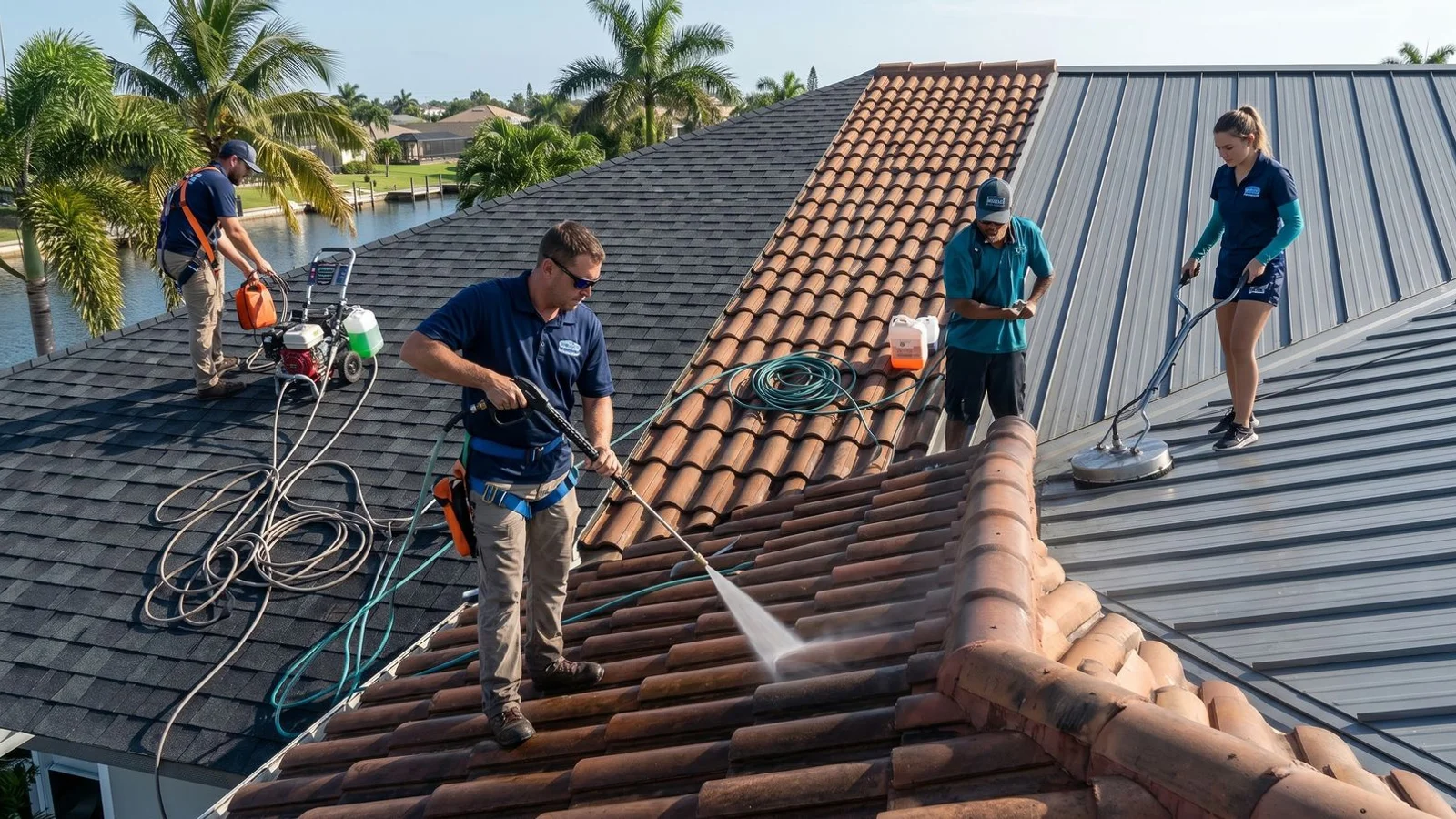
Different roof materials need different soft wash approaches. The chemistry stays similar, but dilution rates, dwell times, and application techniques vary by substrate. Here’s how we adapt the method for the three most common SWFL roof types.
Asphalt Shingle Roofs
The most common roof material in SWFL by a wide margin. Asphalt shingles are made of fiberglass mat coated with asphalt and topped with mineral granules (the colored layer you see). The granules protect the asphalt from UV degradation and give the roof its color and texture.
Our method:
- Sodium hypochlorite at ARMA-aligned dilution (specifically calibrated to be granule-safe)
- Low-pressure application from telescoping wand at ground level
- 5-15 minute dwell time depending on staining severity
- Low-pressure rinse from top down
What to know:
- This is the only method ARMA (Asphalt Roofing Manufacturers Association) recommends
- Pressure washing voids most shingle warranties
- Older shingles (10+ years) need conservative dwell time to avoid over-treatment
- Re-treatment every 2-3 years is typical for SWFL
Concrete and Clay Tile Roofs
Tile is the second-most-common SWFL roof, especially on homes in master-planned communities, custom builds, and Cape Coral waterfront properties. Two main types:
- Barrel tile — the curved S-profile, classic Mediterranean look
- Flat tile — flat with subtle texture, common on modern builds
Our method:
- Same sodium hypochlorite chemistry, adjusted dwell time
- Telescoping wand from ground level (we minimize roof access)
- When ladder access is needed, we use foam padding at load-bearing points
- Slightly longer dwell on flat tile (more porous)
What to know:
- Walking the roof cracks tile — avoid operators who routinely walk tile during cleaning
- Color restoration is impressive on tile (often back to 90% of original)
- Re-treatment every 2-3 years
- Lichen on tile takes a second pass — common on older, north-facing tile
Metal Roofs
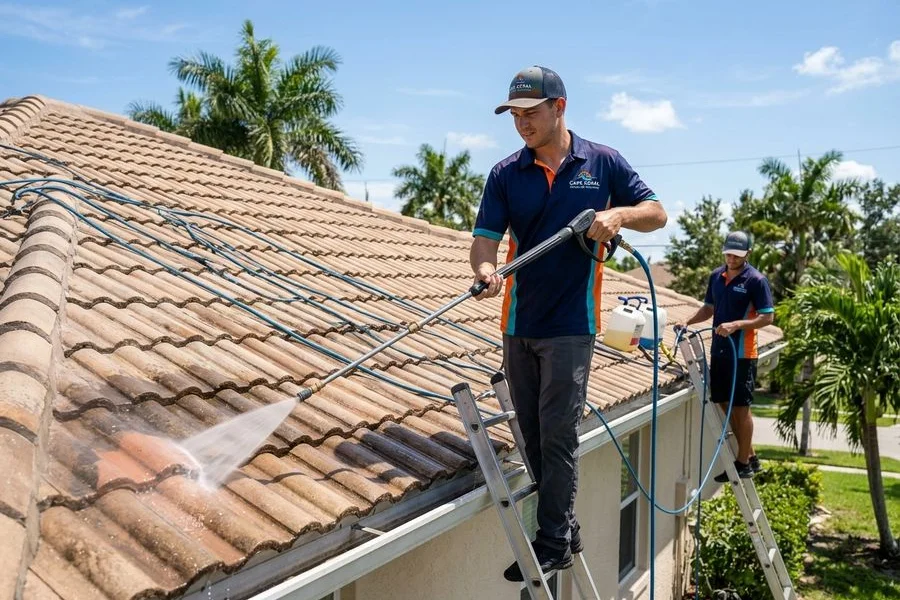
Less common but growing in SWFL — especially standing-seam metal on modern builds and Hardie-look metal on coastal homes (Sanibel, Fort Myers Beach). Two main categories:
- Standing-seam steel or aluminum — most common modern metal roof
- Coated metal panels — Hardie-look profile, painted finish
Our method:
- pH-balanced chemistry (more neutral than shingle/tile chemistry to protect coating)
- Low-pressure rinse only — high pressure can damage coating
- Special care around fastener heads and seam joints
- Faster overall job (metal sheds quickly)
What to know:
- Metal roofs grow less algae than shingle/tile but still benefit from cleaning
- Cleaning frequency can stretch to 3-4 years for most metal roofs
- Coastal metal roofs need salt-rinse more often (annual recommended)
- Standing-seam roofs require careful attention to seam direction during rinse
Comparing the Three
| Aspect | Shingle | Tile | Metal |
|---|---|---|---|
| Chemistry | ARMA-aligned hypochlorite | Same, longer dwell on flat tile | pH-balanced |
| Pressure | Under 500 PSI | Under 500 PSI | Rinse only |
| Roof access | Minimal | Avoided when possible | Generally not needed |
| Cadence | 24-36 months | 24-36 months | 36-48 months |
| Cost range | $350-$1,000 | $450-$1,500 | $400-$1,200 |
What Doesn’t Change
Regardless of roof material, certain steps stay constant:
- Landscape protection (pre-wet, drape, neutralize)
- Pet protocols (indoors during dwell)
- Pool filtration protection if adjacent
- Documentation before and after
- 100% satisfaction guarantee
Wrong-Method Risks by Material
The damage patterns when the wrong method is used:
- Pressure on shingle: granule loss, warranty void, accelerated aging
- Walking tile during pressure cleaning: cracked tile, displaced tile, lifted underlayment
- High pressure on metal: coating damage, fastener loosening, water under seams
- Wrong chemistry on metal: corrosion of coating, especially on standing-seam joints
Get the Right Method for Your Roof
When you request a quote, let us know your roof type. We’ll calibrate the chemistry and method specifically for your substrate. See the Soft Wash Roof Cleaning service page for the full method, or request a free quote with your roof type, footprint, and any specific concerns.
Related Service
Soft Wash Roof Cleaning →Low-pressure soft wash treatment that lifts black algae streaks, lichen, and biological growth without damaging tile, shingle, or metal roofs.