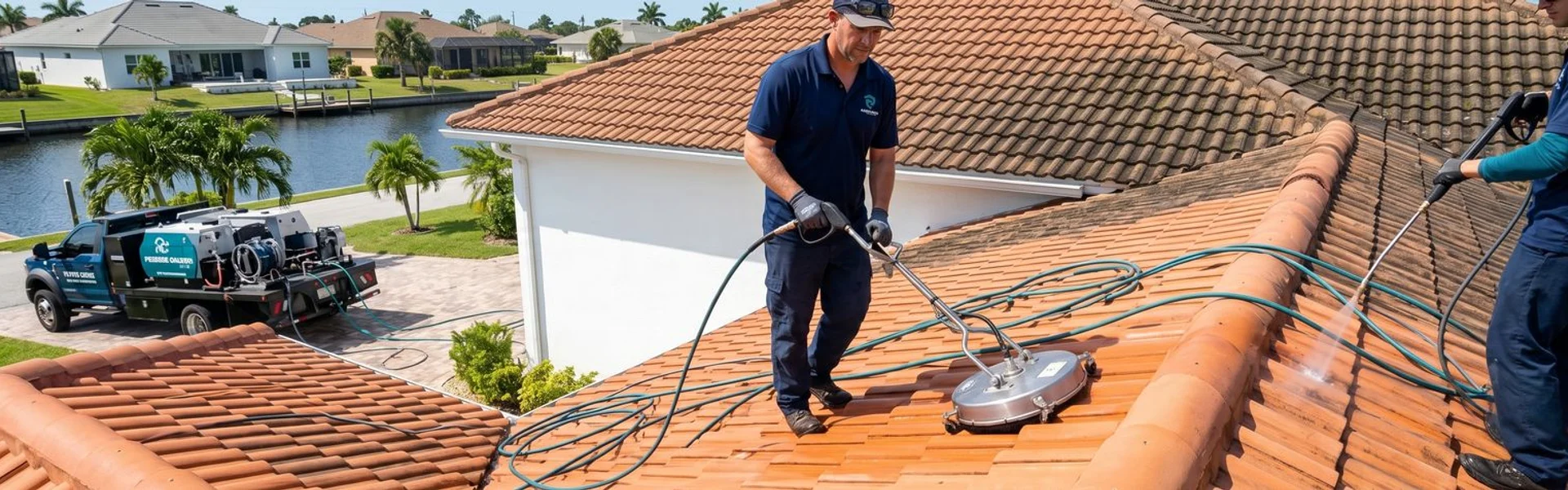
What's Causing the Black Streaks on Your Florida Roof
Those black streaks are Gloeocapsa magma — a cyanobacterium feeding on shingle limestone. Here's how it spreads and how to stop it.
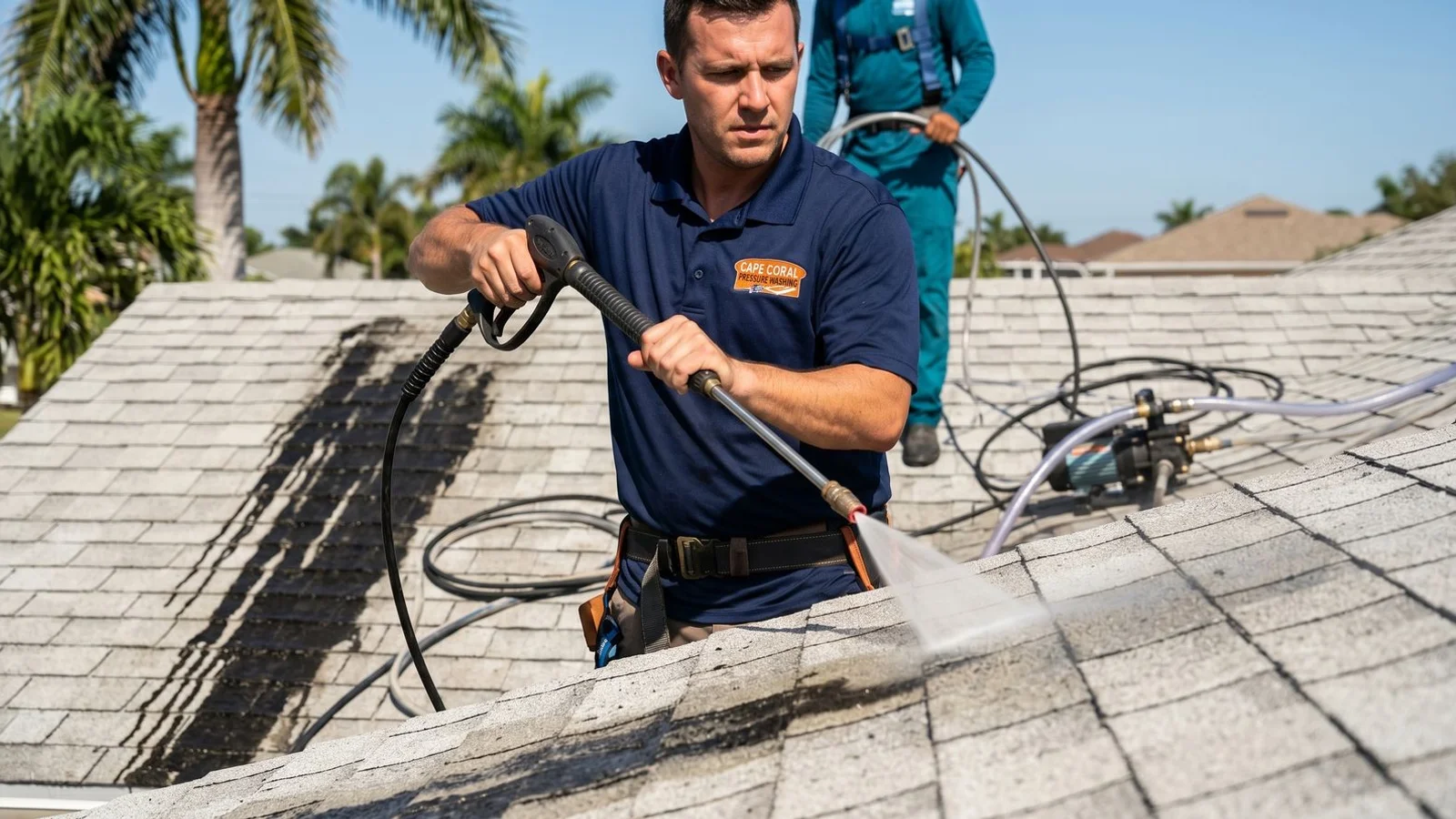
We often hear from Cape Coral homeowners searching for solutions to the black streaks on roof florida properties are infamous for. Those unsightly marks are rarely just dirt or soot. Our crews identify the culprit daily as Gloeocapsa magma, an aggressive cyanobacterium responsible for nearly 80% of stained roofs across the United States.
This specific airborne algae has evolved to thrive perfectly in our intense local climate.
We will break down exactly how this organism spreads, the hidden damage it causes, and the proven maintenance strategy to eliminate it permanently. Understanding the facts gives you the power to protect your property value.
What Gloeocapsa Magma Is
Gloeocapsa magma is a destructive, blue-green algae that feeds directly on the limestone filler used in modern roofing materials. We see this cyanobacterium thrive in warm, wet conditions while it literally eats away at your shingles to survive. Manufacturers began adding more calcium carbonate filler to fiberglass shingles in recent decades, which accidentally created an unlimited food source for these spores.
Our experts notice that the algae starts off completely invisible or slightly green before changing color. The signature dark streaks only appear after the bacteria develops a hardened, UV-protective melanin coating to shield itself from the intense Florida sun.
This organism targets multiple surface types across residential properties:
- Asphalt Shingles: The bacteria extracts calcium directly from the embedded limestone granules.
- Concrete Tiles: Spores feed on the accumulated biological matter trapped inside the porous finish.
- Clay Tiles: Moisture retained on the surface provides a breeding ground for rapid cell division.
Why SWFL Roofs Are Hit Hardest
Southwest Florida roofs face the most severe algae infestations in the country because the regional climate acts as a perfect year-round incubator. We constantly battle this rapid growth because the local environment supplies endless moisture, high temperatures, and abundant food. The combination of coastal proximity and heavy summer rainfall creates conditions that are impossible for untreated surfaces to withstand.
Our region provides all three essential elements for an algae explosion at maximum intensity:
- Extreme Moisture: Fort Myers and Cape Coral experience average morning humidity levels hitting a staggering 90%.
- Constant Warmth: The annual average temperature sits comfortably above 75 degrees Fahrenheit, allowing colonies to remain active all year.
- Abundant Food: Dense neighborhoods filled with limestone-heavy asphalt and porous tile roofs provide an endless buffet.
We observe that this unique trifecta gives Southwest Florida the densest Gloeocapsa coverage in the continental United States. Property owners here must adopt aggressive maintenance schedules simply to keep up with the rapid biological growth.
How It Spreads
Gloeocapsa magma is highly contagious and spreads primarily through airborne spores carried by coastal winds. We typically see infestations begin as microscopic cells dropped by birds or rain before quickly multiplying into massive colonies. The bacteria aggressively targets north-facing and west-facing slopes first because those shaded areas hold morning dew longer.
Our team tracks the spread of these colonies through two distinct movement patterns across a property:
- Vertical Down-Slope Runoff: Heavy afternoon rainouts wash the dividing cells down the pitch of your structure. This water flow creates the thick, vertical black streaks shingle roof owners constantly battle.
- Neighborhood Air Currents: Wind easily carries the microscopic spores hundreds of feet across property lines.
We always warn clients that an infested house next door guarantees an eventual problem for your own property. A clean roof sitting next to a streaked one is usually only 12 to 24 months away from establishing its own visible colony.
The Damage It Causes
Allowing an algae infestation to fester will cause severe structural deterioration and force an early roof replacement. We have inspected hundreds of failing roofs where this bacteria completely eroded the protective weatherproofing layer. The Roof Cleaning Institute of America notes that severe, untreated growth can slash a standard roof’s service life by up to an entire decade.
Our damage assessments consistently reveal a cascade of expensive problems for local homeowners:
- Limestone Depletion: The cyanobacteria physically consumes the granular filler, leaving the fiberglass backing dangerously exposed to UV rays.
- Moisture Retention: Thick algae mats trap rainwater against the surface to accelerate rot and structural decay.
- Lichen Evolution: Old algae colonies create a biological foundation for destructive lichens. These complex organisms grow roots that physically penetrate and fracture the shingle substrate.
- Tile Etching: Porous materials suffer permanent pitting and severe color fading over time.
We remind customers that the financial impact of ignoring this problem is massive. A standard roof replacement in Florida currently averages between $9,000 and $26,000 in 2026, making preventive care much cheaper than a premature installation. A typical 30-year system frequently fails around year 18 when left completely unprotected from biological attacks.
Why Pressure Washing Won’t Solve It
Blasting your shingles with high-pressure water is the worst possible response to a biological infestation. We constantly repair homes where well-meaning owners destroyed their own weatherproofing by using heavy machinery instead of proper chemistry. The sheer force only shears off the top layer of the bloom, leaving the microscopic root network completely intact.
Our cleaning specialists find that pressure-washed streaks almost always return within six to twelve months. The original colony simply regrows from the surviving cellular base embedded deep inside the asphalt filler.
We strongly advise against forceful water jets because they cause irreversible mechanical damage:
- Granule Loss: The high PSI instantly strips away the protective coating meant to reflect solar heat.
- Warranty Voidance: The Asphalt Roofing Manufacturers Association strictly warns that using a pressure washer will immediately void your material warranty.
- Accelerated Decay: Forcing water under the shingle tabs drives moisture directly into the wooden roof deck.
The Soft Wash Solution
The only scientifically approved method for eradicating roof algae relies on a low-pressure chemical application known as soft washing. We use a precise mixture of water and sodium hypochlorite to safely dissolve the bacteria at the cellular level. This exact chemistry is universally recommended by the Asphalt Roofing Manufacturers Association for safe, effective cleaning.
Our targeted approach requires three specific components to succeed:
- Diluted Biocide: A 50:50 sodium hypochlorite mix oxidizes the algae membranes without destructive scrubbing.
- Clinging Surfactants: Sticky agents help the solution grip the pitched surface to penetrate the deep root system.
- Low-Pressure Rinse: A gentle wash safely removes the dead organic matter without stripping granules.
We find that a professionally soft-washed property remains clear and protected for two to three years before needing another application. For an in-depth breakdown of our exact process, you can explore our full Soft Wash Roof Cleaning guide. Homeowners unsure of their current exterior condition should review these common Signs Your Roof Needs Cleaning to catch infestations early.
SWFL Maintenance Schedule
Establishing a consistent preventive schedule is the most cost-effective way to maximize the lifespan of your exterior surfaces. We recommend treating the sanitation of your shingles just like regular pest control for the inside of your home. Staying ahead of the growth curve prevents the algae from ever developing a destructive root system.
Our maintenance plans are specifically calibrated to combat the aggressive biological growth seen throughout Lee and Collier counties. The exact timeline always depends on the unique environmental exposure of your specific house.
Here is the baseline cadence required to keep local properties structurally sound:
| Property Condition | Treatment Frequency | Primary Trigger |
|---|---|---|
| Standard Sun-Exposed Roof | Every 2 to 3 years | First signs of faint dark streaks |
| North-Facing or Heavy Tree Canopy | Every 18 to 24 months | Excessive shade and morning dew retention |
| Post-Hurricane or Major Storm | As needed | Heavy accumulation of biological debris |
We find that properties following this exact schedule completely avoid the expensive, compound degradation associated with neglected shingles. To take the next step, Get a free roof cleaning quote today so a technician can evaluate your algae coverage and design a personalized intervention plan.
Related Service
Soft Wash Roof Cleaning →Low-pressure soft wash treatment that lifts black algae streaks, lichen, and biological growth without damaging tile, shingle, or metal roofs.