How to Tell If Your Florida Roof Is Due for a Cleaning
Black streaks, dark patches, lichen, or moss — visual signs your SWFL roof needs soft wash before damage compounds.
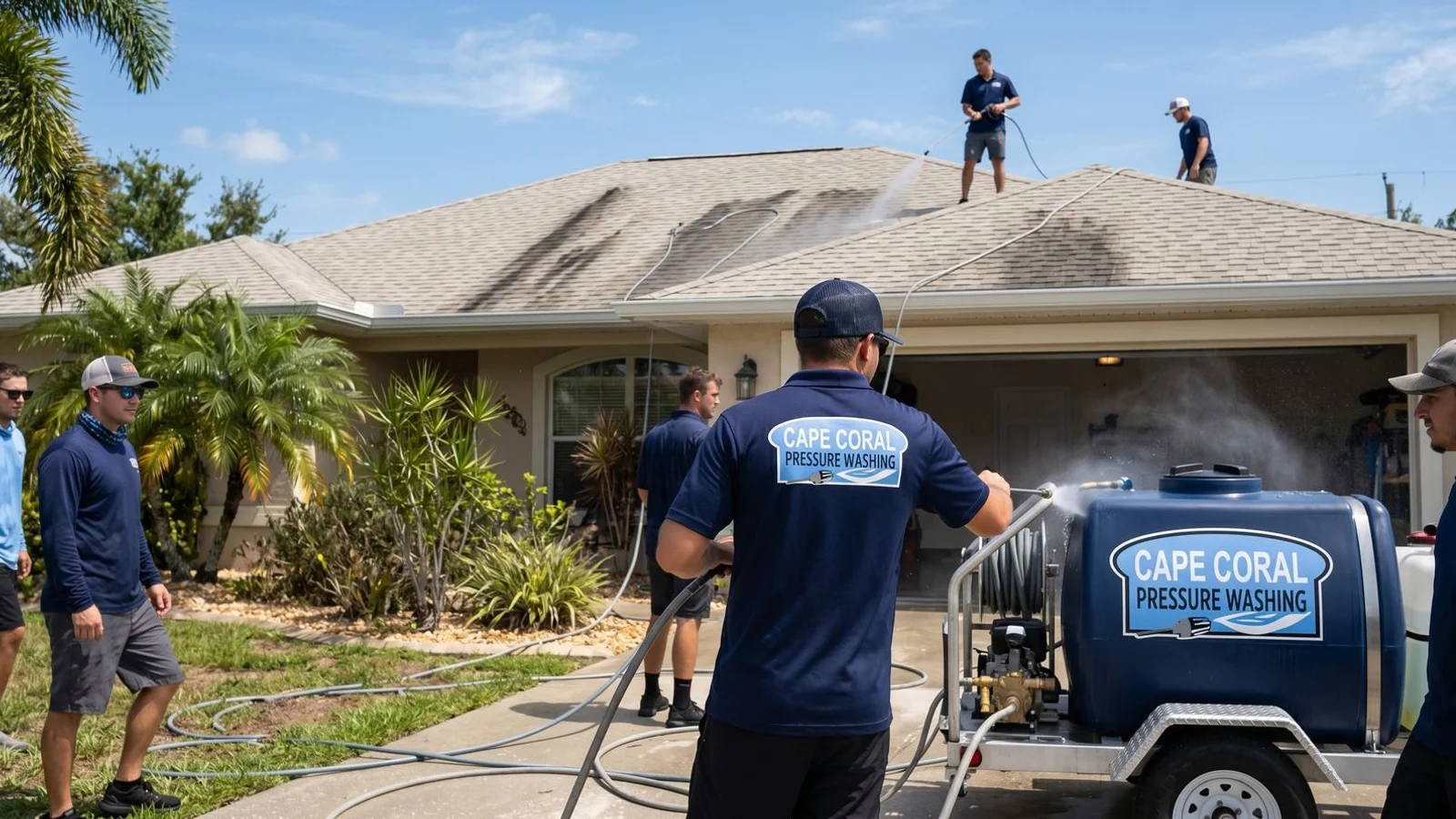
A roof cleaning isn’t always obvious from the ground. By the time you can see something is wrong, the biological growth has often been working on the substrate for a year or more. Here are the six visual signs that tell you a cleaning is overdue.
1. Black Vertical Streaks
The most common SWFL sign. Dark vertical bands running down the slope, usually starting at ridges or vents. This is Gloeocapsa magma — the cyanobacterium responsible for nearly every black-streak roof in the southeastern US.
Severity:
- Light (1-2 streaks visible only up close): early colony, easy soft wash
- Moderate (visible from curbside): established colony, standard soft wash
- Heavy (entire slopes covered): 5+ years of growth, longer dwell time required
See Black Streaks on Florida Roofs for the full biology of Gloeocapsa and why it matters.
2. Dark Patches (Not Streaks)
Different from vertical streaks — large irregular dark areas, often on north-facing slopes or in shaded valleys. Usually mold, mildew, or a mix of biological growth. Indicates trapped moisture and slower drainage in that area.
Severity:
- Single small patch: early-stage, soft wash will lift fully
- Multiple patches across the slope: established, may indicate drainage or moisture problem worth a roofer’s look
3. Lichen
Lichen looks different from algae and mold. It’s:
- Crusty or scaly in texture
- Light colored (white, grey, pale green)
- Often appears as small spots that grow into larger colonies
- Harder to remove than algae — requires longer dwell time
Lichen indicates the roof has been neglected long enough for the more aggressive symbiotic organism (fungus + algae) to establish. Soft wash still handles it, but may need a second pass.
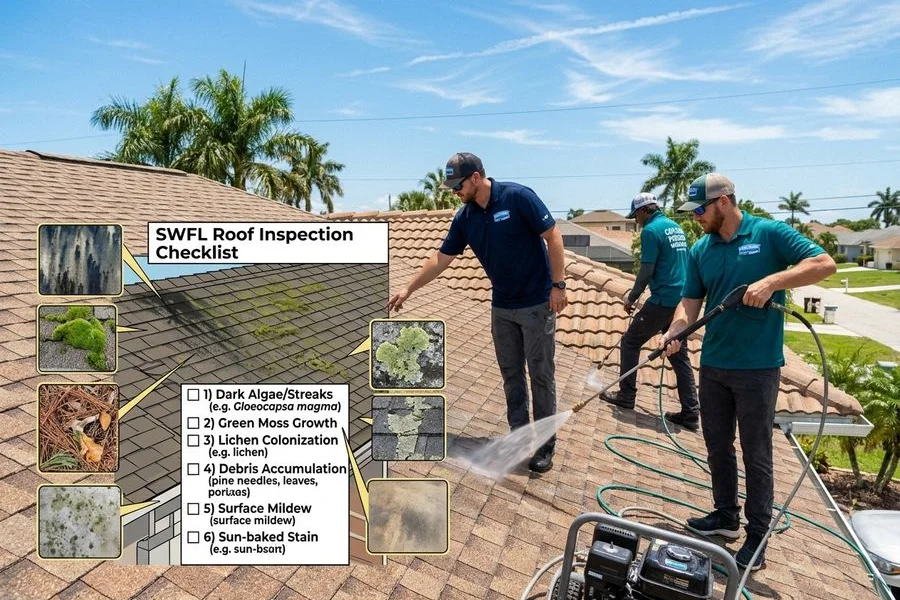
4. Moss in Valleys or Behind Gutters
Moss is a step beyond lichen — it indicates standing moisture for extended periods. Common locations:
- Roof valleys (where two slopes meet)
- Behind gutters
- Around chimneys, vents, skylights
- North-facing slopes under tree canopy
Moss can lift shingles and trap water behind tiles. Soft wash kills it, but if there’s lifting damage from moss, that’s a roofer’s call.
5. Visible Debris in Granule Layer
Look at your shingles from the ground. If you see:
- Granule loss (bald patches on shingles)
- Granules accumulated in gutters
- Visible debris (leaves, pine needles) trapped on the slope
These indicate the roof has been carrying moisture and biological matter for a long time. Cleaning removes the debris and the moisture problem. Granule loss itself is a roofer concern — clean first, then have a roofer inspect.
6. Stained Stucco Below the Roofline
Sometimes the most visible sign isn’t on the roof — it’s on the wall below. Dark stains running down stucco from the gutter line or roof edge indicate biological matter washing down from a contaminated roof.
If the stucco is stained, the roof above is heavily contaminated. Both need cleaning.
How to Inspect from the Ground
You don’t need a ladder for any of this. Walk slowly around the house in good daylight, look up at each slope, and check:
- Both visible long sides
- Front and back if accessible
- Ridge cap line (top of the roof) for early signs
- Areas under or near tree canopy first (most likely to show growth)
A pair of $30 binoculars helps for second-story roofs. Take photos so you can compare year-over-year.
When to Skip Cleaning and Call a Roofer
If you see any of these, stop the cleaning conversation and call a roofer first:
- Lifted, curling, or missing shingles
- Cracked or displaced tiles
- Visible flashing damage
- Soft spots when walked (don’t walk it yourself — note from ground)
- Daylight visible from inside the attic
- Active leaks during rain
A cleaned damaged roof is still a damaged roof. The order matters: roofer first, then cleaner.
Most Common SWFL Sign
For Cape Coral, Fort Myers, and Naples homes, the #1 trigger sign is visible black vertical streaks from curbside. By the time you can see them clearly, the cleaning is already overdue. Cleaning at this stage is normal — it’s the 2-3 year cadence catching up.
Get a free roof cleaning quote and we’ll do a full visual assessment during the site walk. The Soft Wash Roof Cleaning service page has the method details.
Related Service
Soft Wash Roof Cleaning →Low-pressure soft wash treatment that lifts black algae streaks, lichen, and biological growth without damaging tile, shingle, or metal roofs.