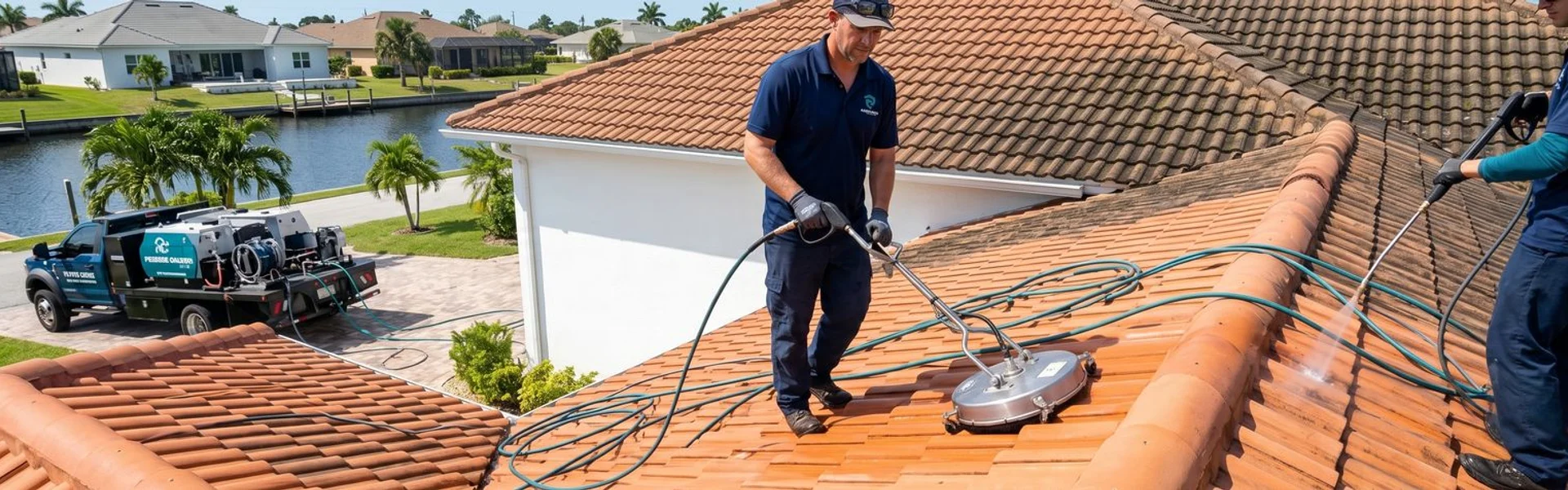
Why Your Florida House Grows Mold Faster Than Anywhere Else
Humidity + heat + organic spores grow mold on SWFL siding year-round. Here's why and what stops it.
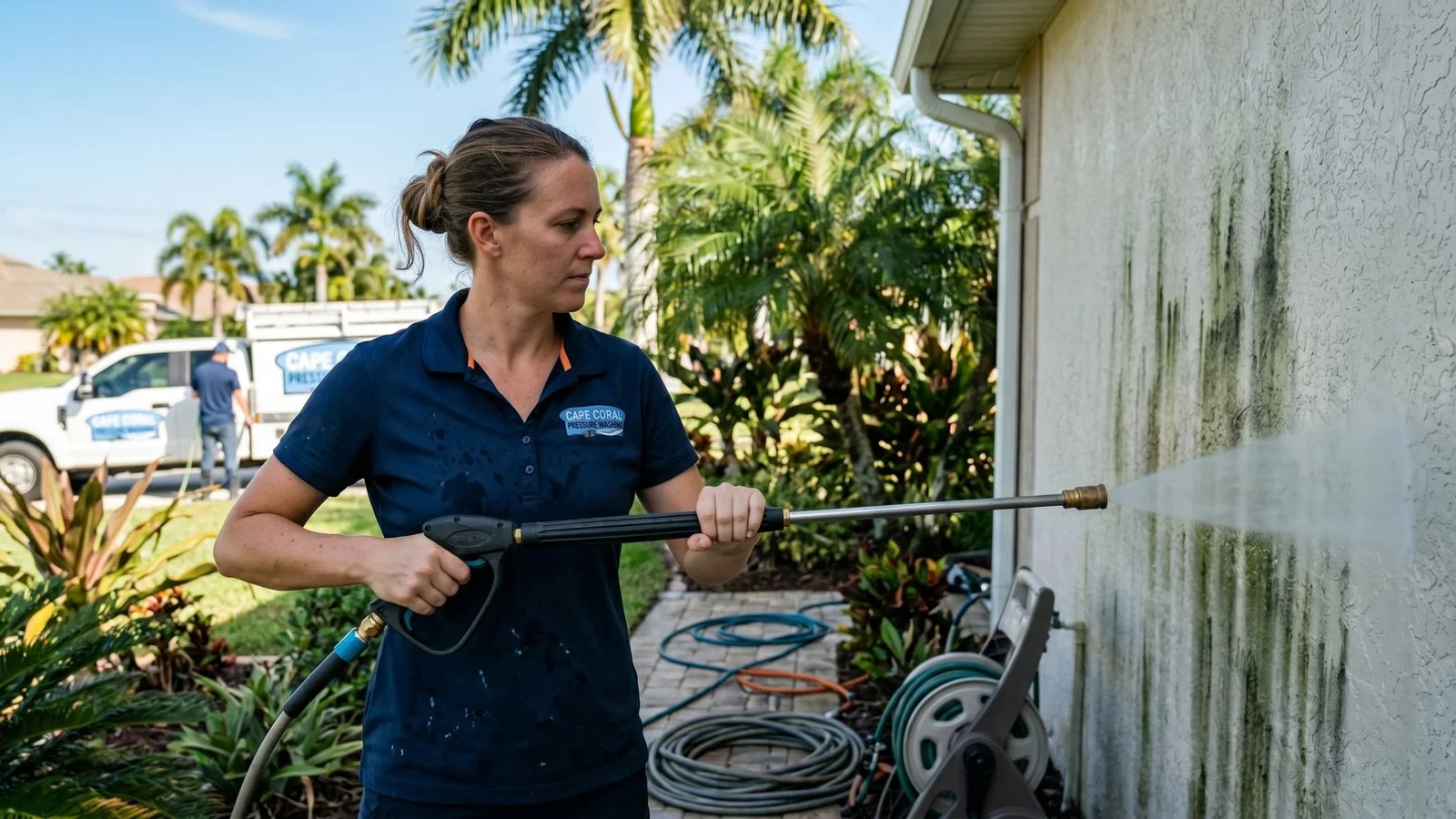
If you’ve ever wondered why the north wall of your Cape Coral home grows mold faster than the south wall, or why the same paint job that lasted 8 years up north lasts 4 years here, the answer is biology meeting climate. SWFL is essentially the perfect petri dish for mold and mildew. Here’s what’s happening and how to manage it.
The Three Conditions Mold Needs
Mold and mildew need three things to grow:
- Moisture — water available consistently
- Warmth — temperatures between 60-85°F preferred
- Food source — organic matter, biological residue, even paint binder
SWFL provides all three at maximum intensity, year-round. The result: mold growth that’s 2-3x faster than continental US averages.
Why SWFL Is the Worst Case
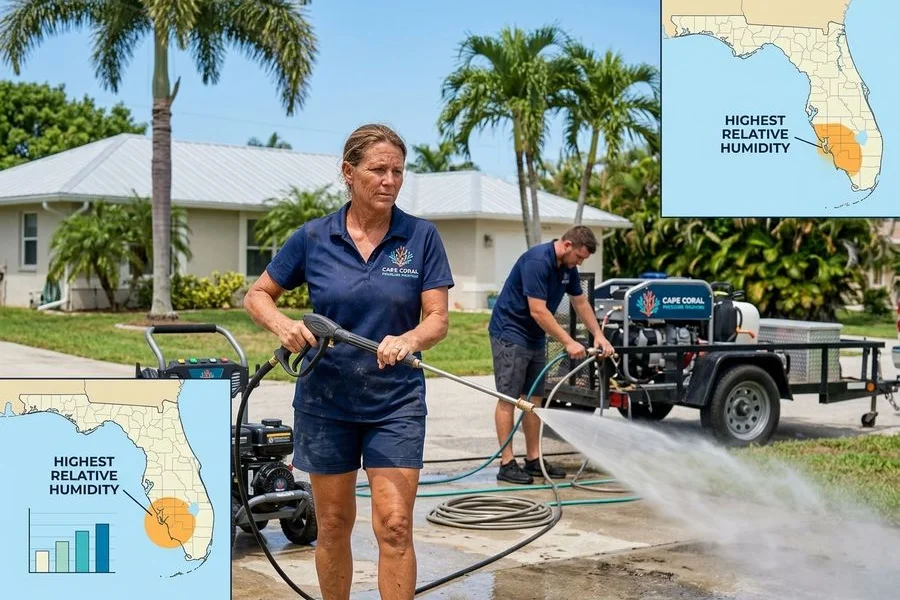
Humidity: Cape Coral averages 70-90% relative humidity year-round. Summer peaks hit 95%. Mold needs roughly 60% humidity to thrive — we’re consistently above that.
Temperature: SWFL rarely drops below 60°F. Winter doesn’t stop mold growth here like it does in northern states. Florida mold gets 12 months of growing season.
Spore load: Florida has high airborne spore counts year-round, especially after rain. Spores land on every horizontal and protected surface continuously.
Direct sun cycle: Even south-facing walls get rain and humidity. The afternoon shade pattern creates damp/dry cycles ideal for mold establishment.
The North-Side Problem
Walk around any SWFL home and look at the north and west sides vs the south and east sides. The difference is dramatic:
- North side: least direct sun, holds moisture longest, mold colonies establish fastest
- West side (afternoon shade): moderate, mold grows in shaded sections
- East side (morning sun): dries fast in morning, less mold growth
- South side: most direct sun, driest, least mold
For most SWFL homes, the north and west walls need cleaning every 12 months while south and east walls might stretch to 18-24 months. Many cleaning schedules just target the worst walls more frequently.
Irrigation Overspray — The Hidden Mold Driver
The #1 controllable mold accelerator: irrigation overspray. Sprinkler heads that hit lower siding create chronic damp conditions. Most homeowners can identify their irrigation pattern by looking at the mold growth on the walls — it forms a perfect arc matching the sprinkler spray.
The fix is simple: redirect sprinkler heads away from walls. A $50-100 plumber call adjusts the heads. Combined with annual house wash, this dramatically reduces mold establishment.
What Pressure Washing Leaves Behind
This is critical: pressure washing your house removes the visible mold but leaves the spores alive. Within 3-6 months, the colony re-establishes and the mold returns. You pay to wash twice as often as you should.
Soft wash chemistry kills the spores. The biocide stays active in the substrate briefly after rinse, killing residual organisms. That’s why properly soft-washed siding holds 12-18 months — the colony has to re-establish from airborne spores, not regrow from surviving roots.
The Long-Term Damage
Ignored mold doesn’t just look bad:
- Etches paint binder — paint adhesion compromised, premature paint failure
- Penetrates stucco surface — establishes deep colonies that get harder to remove over time
- Stains brick mortar — permanent discoloration
- Holds moisture against substrate — accelerates wood rot under siding
- Creates indoor air quality concerns — if mold reaches wall cavity
A home that gets washed regularly (12-18 month cadence) typically gets 2-3 extra years out of each paint cycle. The savings on paint amortize the cleaning cost on their own.
The Right SWFL Approach
The realistic SWFL maintenance plan:
- Annual full house soft wash (or 18-month max)
- North/west walls touched up at 6 months if visible regrowth
- Irrigation overspray addressed at root cause
- Bundle with roof and driveway for cost efficiency
- Post-storm bonus cleanings when conditions warrant
Pricing for the standard annual wash typically runs $250-$800 depending on home size and stories. See House Washing Cost Florida for full breakdown.
You Can’t Outrun the Climate
This is the harsh truth most homeowners coming from drier states have to accept: you cannot maintain SWFL exterior walls on a 5-year cleaning cycle. The climate forces a tighter cadence. Fighting it is more expensive than embracing it.
The good news: regular soft wash keeps homes looking 5 years younger than identical houses on stretched schedules. The investment pays in paint life, curb appeal, and resale value.
Get a free house wash quote — we’ll assess your specific exposure and recommend a cadence. See House Washing for the full method.
Related Service
House Washing →Complete soft-wash exterior cleaning that strips mold, mildew, and grime from stucco, vinyl, brick, and painted siding without damaging paint or landscaping.