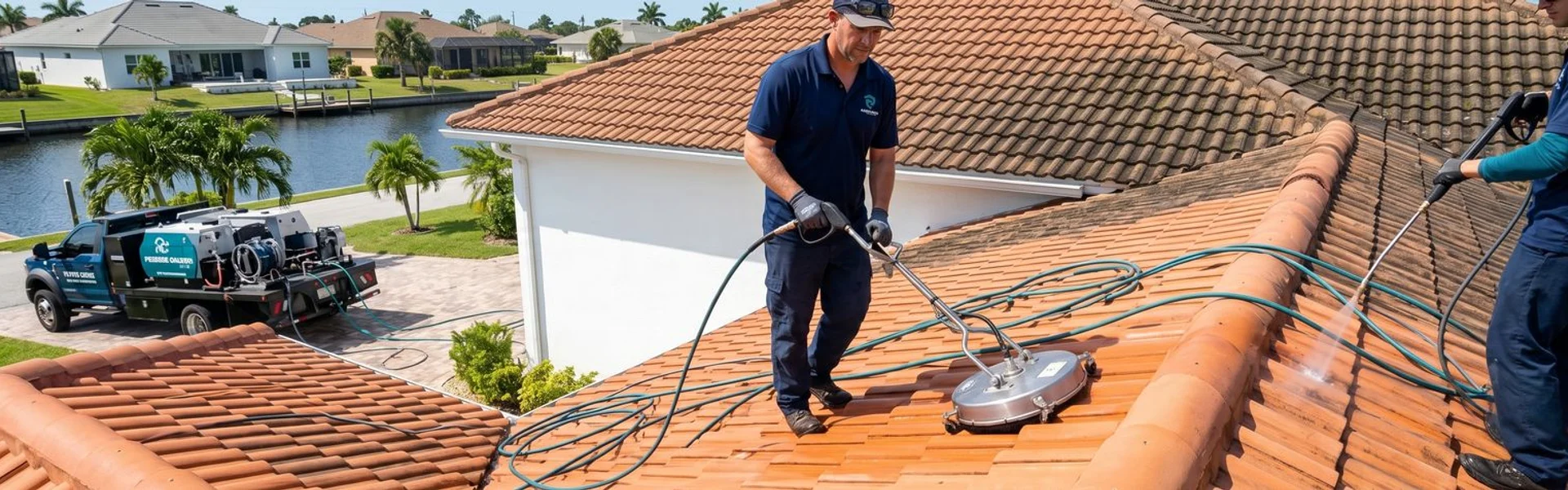
What Soft Wash House Washing Is and Why It's Safer Than Pressure
Soft wash kills mold at the root with chemistry, not pressure. Safe for stucco, vinyl, painted, and brick siding.
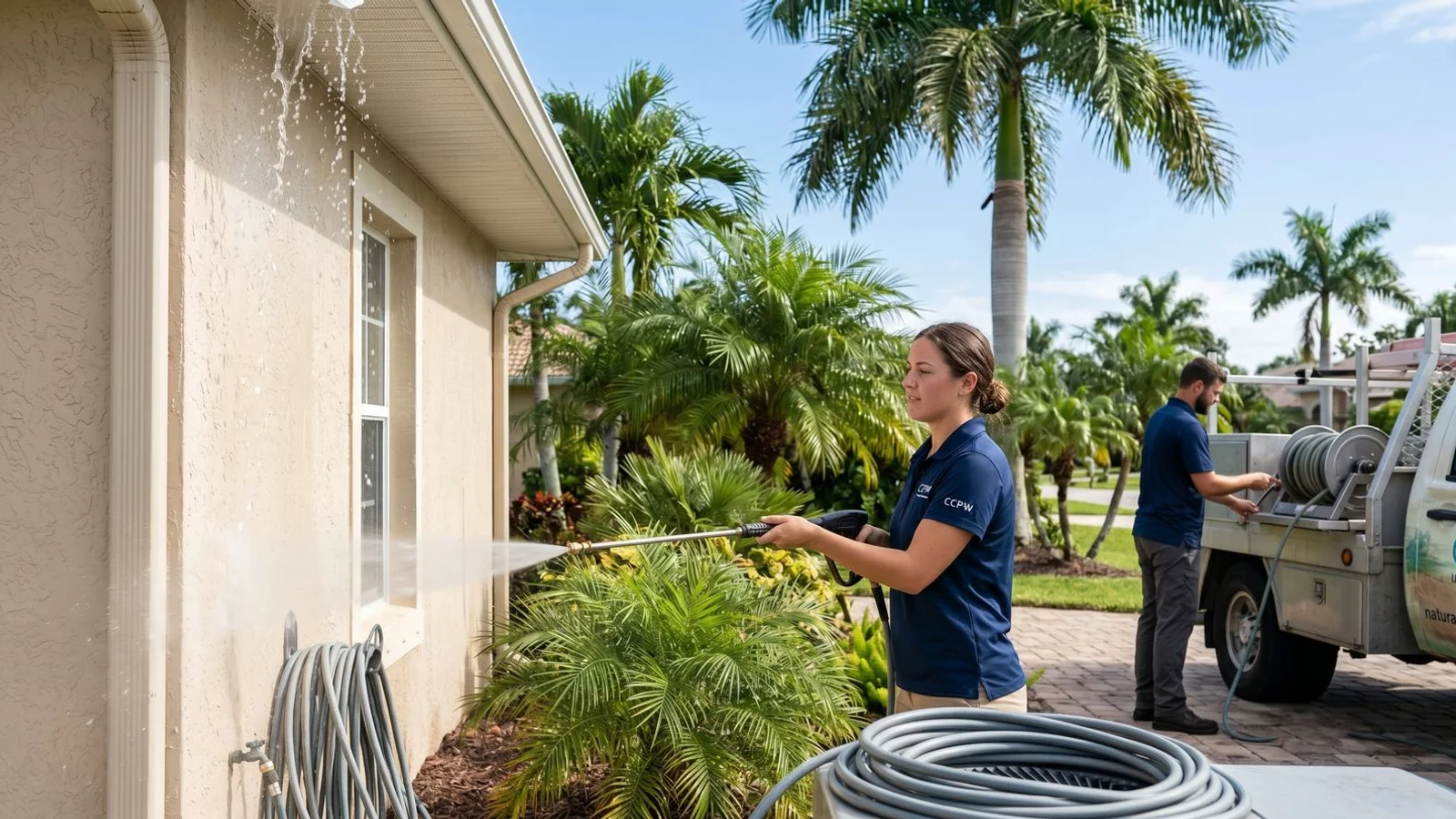
The term “house washing” gets used to mean two completely different things: a high-pressure blast of your siding, or a chemistry-led low-pressure soft wash. Only one of those is safe for your stucco, vinyl, painted siding, or brick. Here’s what soft wash house washing actually is and why it’s the right method for SWFL homes.
The Definition
Soft wash house washing uses a chemistry blend — typically sodium hypochlorite with surfactants and biocide — applied at low water pressure (under 500 PSI). The chemistry kills mold, mildew, and biological growth on siding. The low-pressure rinse lifts the dead organisms without damaging the substrate.
The chemistry is calibrated for the siding material. We adjust dilution for stucco vs vinyl vs painted wood vs brick — each has different absorption characteristics that affect dwell time and concentration.
Why Siding Cannot Handle Pressure Wash PSI
A pressure washer at 3,000-4,000 PSI is designed for concrete and hard mineral surfaces. Siding is none of those:
- Vinyl siding — designed to flex and shed water at normal weather force. High PSI warps panels and forces water behind seams into the wall cavity.
- Stucco — porous surface with paint or pigment topcoat. High PSI erodes the surface and strips coating.
- Painted wood — paint bond designed for weather exposure, not concentrated force. High PSI strips paint, exposes bare wood.
- Brick — masonry surface with mortar joints. High PSI erodes mortar and can drive water into walls.
The damage from pressure-washing siding is often immediate and visible. We see it weekly across SWFL homes that hired the wrong operator.
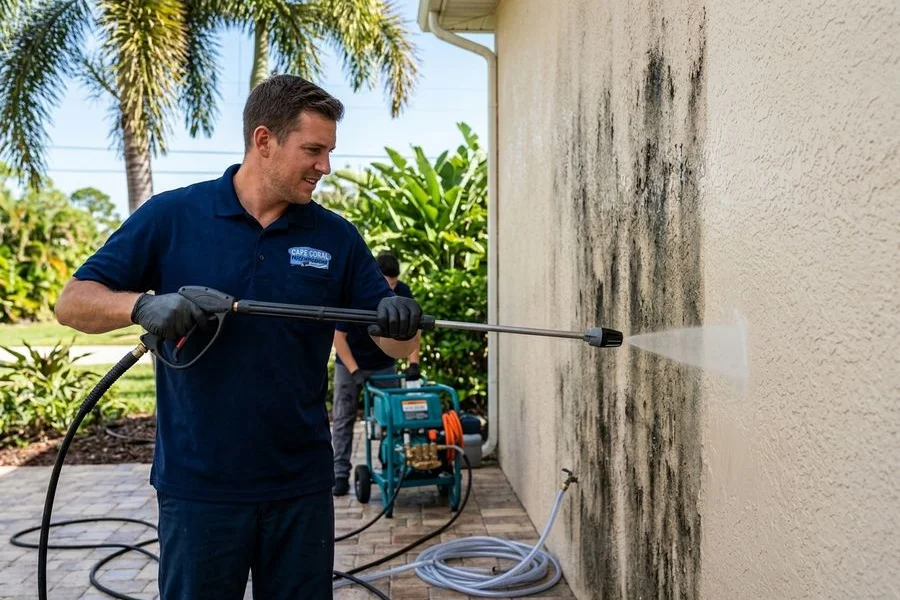
How Soft Wash Chemistry Works
Sodium hypochlorite at proper dilution penetrates the cellular structure of mold and mildew, killing the spores at the root. Surfactants help the chemistry stick to vertical surfaces and penetrate the biological growth. Biocide ensures complete kill of resistant spores. The dwell time (5-15 minutes) allows full penetration.
After dwell, low-pressure rinse (under 500 PSI) lifts the dead organisms and any chemistry residue. Siding emerges clean, mold killed, paint intact.
What Soft Wash Removes
- Mold and mildew (green and black)
- Algae (early-stage cyanobacterium colonies)
- Surface grime accumulated from rain runoff
- Pollen film (especially heavy in SWFL spring)
- Spider webs and insect debris around eaves
- Light dirt and salt residue (coastal homes)
What it doesn’t address:
- Paint failure (cracked, peeling, blistering paint needs paint repair)
- Substrate damage (rotted wood, cracked stucco)
- Stains from rust or oil (separate chemistry needed)
- Calcium deposits (separate treatment)
The Application Process
- Pre-wet landscaping — plants in the runoff path soaked with clear water
- Drape sensitive plants — orchids, vegetable gardens, sensitive landscaping
- Pets indoors — for the chemistry dwell phase
- Apply chemistry — low-pressure spray starting bottom-up
- Dwell — 5-15 minutes depending on staining severity
- Rinse top-down — low-pressure flood rinse
- Neutralize landscaping — neutralizer rinse on adjacent plant areas
- Walkthrough — with you and the crew lead
The whole process for a typical Cape Coral single-family home takes 1.5-3 hours.
Why SWFL Houses Need Soft Wash Specifically
Florida’s year-round humidity (70-90%) grows mold continuously. Most other regions get a winter pause from biological growth — SWFL doesn’t. The chemistry-led approach is the only method that consistently kills the mold rather than just rinsing the surface, which is why properly soft-washed SWFL homes hold for 12-18 months while pressure-washed homes show return within 3-6 months.
For the cadence and frequency expectations, see How Often to Wash a Florida House.
Different from Roof Soft Wash
Some confusion: soft wash for roofs and soft wash for siding use similar chemistry but different application protocols. Roof soft wash uses telescoping wands from ground level, longer dwell time, and more chemistry concentration. House soft wash uses hand wands, shorter dwell, and slightly diluted chemistry.
Same operator, same chemistry family — different calibration for the surface. That’s why a single visit can cover both roof and house wash efficiently.
Ready for a Soft Wash?
If your Cape Coral or SWFL home has visible mold streaks, mildew on shaded walls, or just looks “dingy” from accumulated grime, soft wash is the right tool. See the full House Washing service page or get a free quote for your specific property.
Related Service
House Washing →Complete soft-wash exterior cleaning that strips mold, mildew, and grime from stucco, vinyl, brick, and painted siding without damaging paint or landscaping.