Soft Wash vs Pressure Wash: How to Pick the Right Method
Soft wash uses chemistry at low PSI for roofs and siding. Pressure wash uses force for concrete. Pick the wrong one and you'll damage your home.
You called for a quote, the operator said “we use soft wash” or “we pressure wash everything,” and you’re not sure which one your property actually needs. The honest answer: probably both, applied to different surfaces. The mistake most homeowners regret is letting one operator apply one method to everything.
What Soft Wash Is
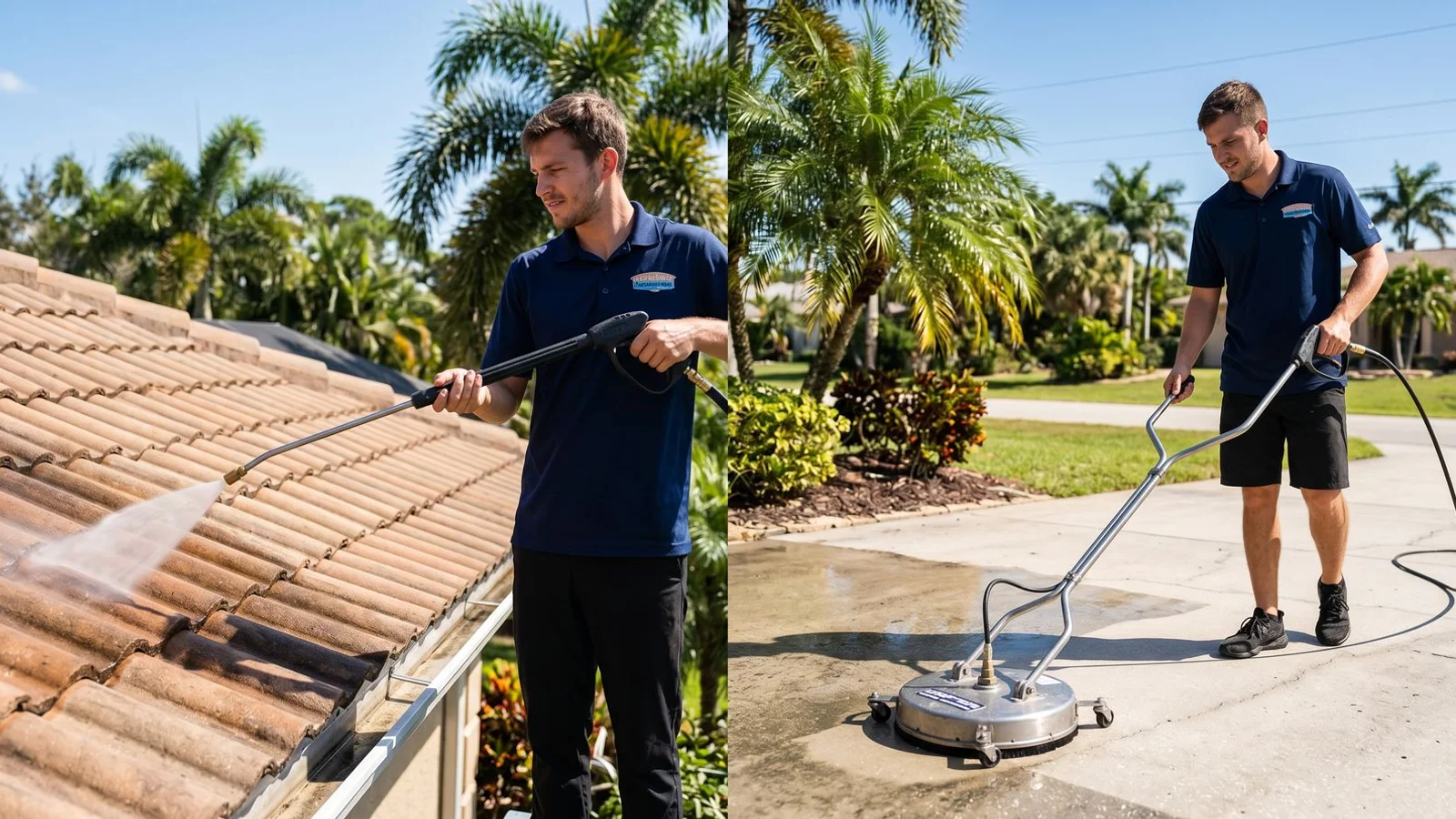
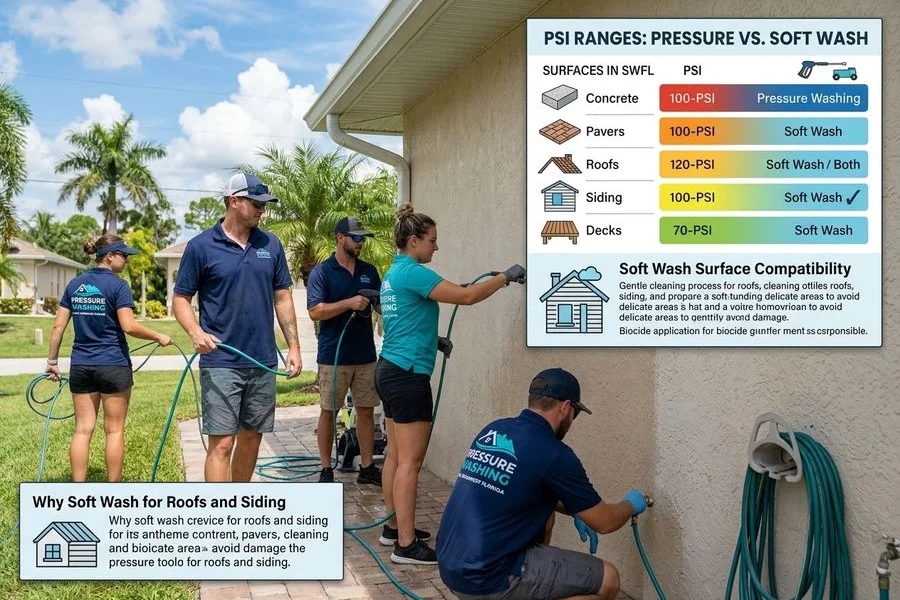
Soft wash uses chemistry — typically a sodium hypochlorite blend with surfactants and biocide — at low water pressure (under 500 PSI). The chemistry penetrates organic growth and kills it at the root. The low-pressure rinse lifts the dead organisms without damaging the substrate.
It is the right method for:
- Tile, shingle, and metal roofs (ARMA-recommended)
- Vinyl, stucco, painted, and brick siding
- Screen enclosures and pool cages (where high PSI blows out spline)
- Solar panels (when paired with deionized water and soft-bristle brush)
- Wood fences (preserves grain)
What Pressure Wash Is
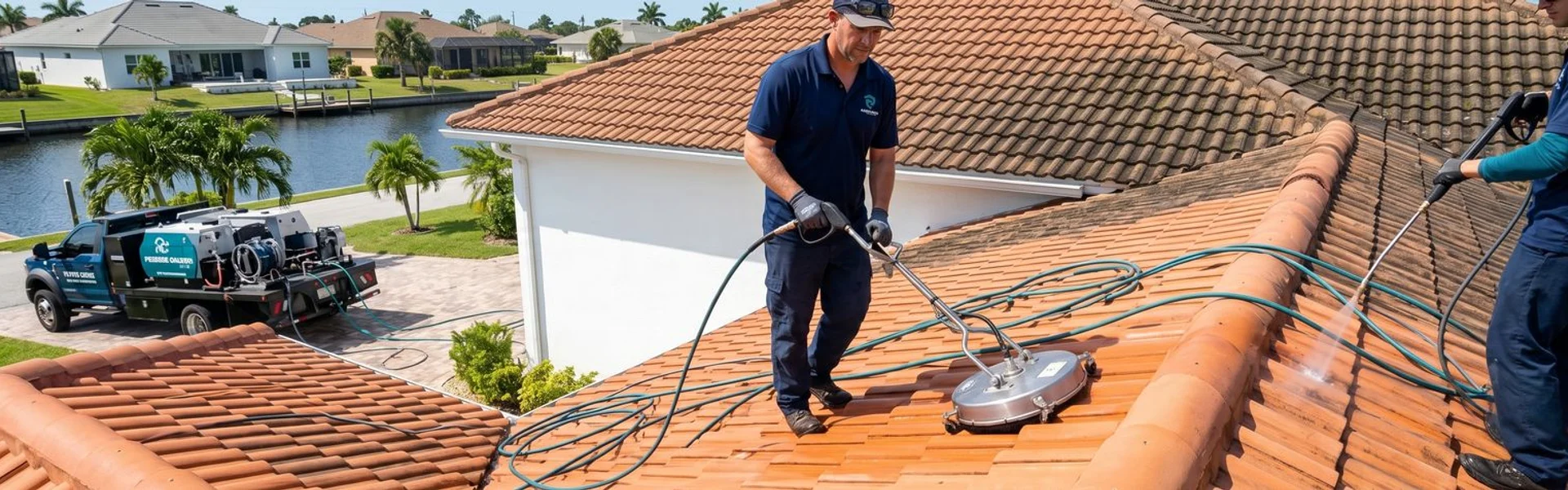
Pressure wash uses water force — typically 2,500 to 4,000 PSI — applied via a rotary surface cleaner or wand. The force physically lifts ground-in dirt, oil, tire marks, and surface contamination. There is no chemistry involved in the wash itself (though degreasers may be pre-treated for oil stains).
It is the right method for:
- Concrete driveways, walkways, patios
- Concrete pool decks
- Garage floors
- Brick pavers (cleaning step before sealing)
- Commercial sidewalks and dumpster pads
Why Method Matters
Use the wrong method on the wrong surface and damage is fast and often permanent:
- Pressure on a shingle roof: strips the granules off, voids the warranty, accelerates failure.
- Pressure on a tile roof: cracks tile, especially barrel tile when the operator walks the roof.
- Pressure on vinyl siding: warps the panels, forces water behind the seams into the wall cavity.
- Pressure on a screen enclosure: blows out the spline, requiring full re-screen ($1,500-$4,000).
- Soft wash on concrete: doesn’t lift the oil, tire marks, or ground-in dirt. The chemistry isn’t the right tool.
The Right Quote Looks Like This
When you call for a quote, the operator should ask what surfaces are involved and quote a method for each:
- Roof? Soft wash, ARMA-aligned chemistry.
- House siding? Soft wash, paint-safe dilution.
- Driveway? Pressure wash with rotary surface cleaner.
- Lanai screen cage? Soft wash, chemistry-led, low-pressure rinse.
- Pool deck concrete? Pressure wash. Pool deck pavers? Pressure clean then seal.
If a quote treats the whole job as “we’ll pressure wash your house” — get a second opinion. That’s the formula for damage.
What This Means for Cape Coral & SWFL
Most SWFL homes need a combination. A typical pre-listing or annual maintenance bundle looks like:
- Roof — soft wash with Soft Wash Roof Cleaning
- House siding — soft wash with House Washing
- Driveway and walkways — pressure wash with Driveway & Concrete Cleaning
- Lanai and pool deck — soft wash on the cage, pressure (or paver service) on the deck
Combining all four in a single visit saves on travel time and usually triggers a bundle discount.
Decision Shortcut
Ask yourself: Is the surface organic (likely to grow mold or algae) or mineral (concrete, brick, masonry)?
- Organic-growth surfaces (roofs, siding, screens) → soft wash
- Mineral / hardscape surfaces (concrete, pavers) → pressure wash
Apply the right method to each, and the surfaces last longer between cleanings. Apply the wrong one, and you’ll be paying to repair damage that wouldn’t have happened.
Ready for a quote that matches the right method to each surface? Get a free quote — we’ll line-item each surface and explain the method choice.