What to Clean (and in What Order) After a Florida Storm
Hurricane cleanup priorities: roof debris first, then siding salt spray, then hardscape. Insurance documentation tips included.
The week after a named storm hits SWFL, every exterior cleaning crew is fully booked and homeowners are confused about what to do first. Here’s the priority order our 20 years of post-storm work has settled on, plus the insurance documentation tips that often pay for the cleaning.
Day 1-3: Structural Inspection First
Do not clean anything until a roofer or general contractor has inspected for structural damage. Pressure washing or even soft washing storm-damaged surfaces can:
- Force water into compromised areas
- Mask damage that needs to be claimed on insurance
- Cause additional damage to loose tiles, lifted shingles, or wind-strained materials
Take photos of all visible damage before any cleanup. Date-stamped photos are your strongest insurance evidence.
Day 3-7: Roof First
After structural clearance, the roof is priority one. Storms deposit:
- Silt and dirt that holds moisture against the surface
- Salt spray (especially in coastal homes — Sanibel, Fort Myers Beach, Marco)
- Algae bloom triggers (humidity + organic debris)
- Plant debris that decomposes and feeds algae
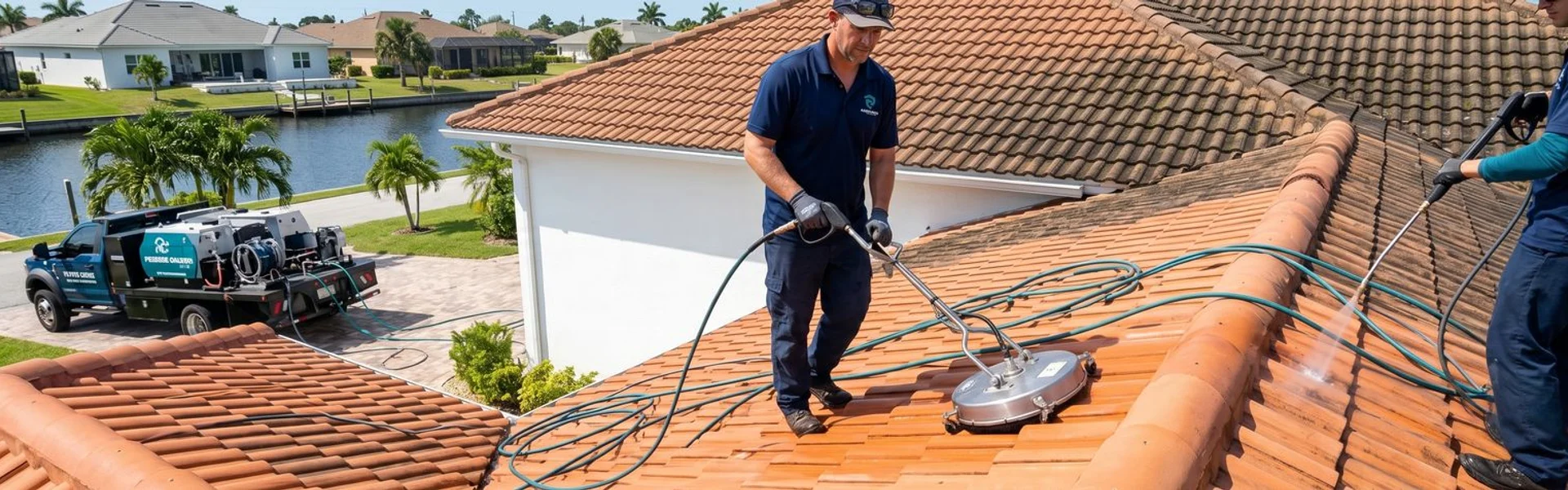
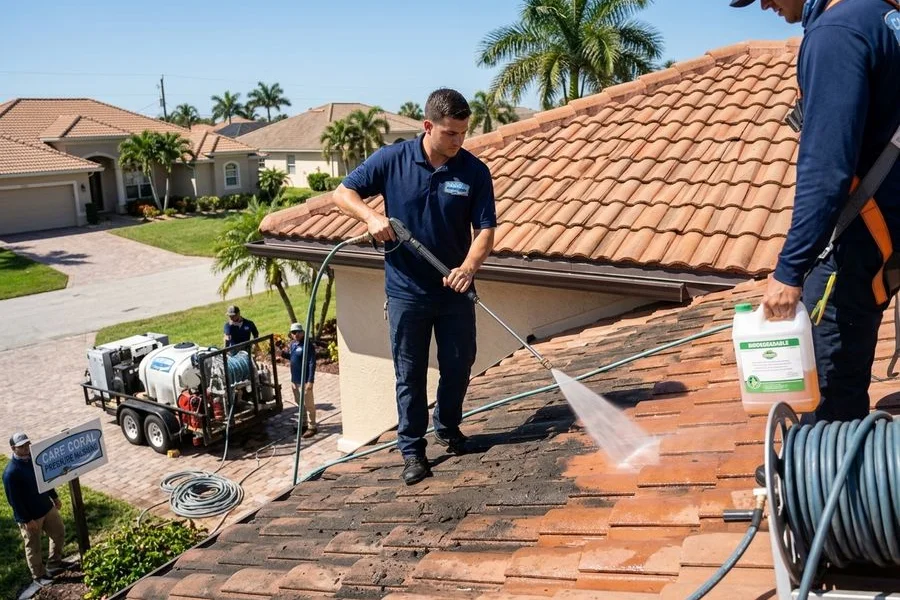
A low-pressure soft wash within the first week prevents the algae bloom that follows storm humidity by 5-7 days. Once the bloom establishes, you’re back to a standard roof cleaning, not just a debris rinse. See Soft Wash Roof Cleaning for the method.
Day 5-10: Siding and Walls
Salt spray on stucco, vinyl, and painted siding eats paint and grows mildew faster than baseline humidity. Coastal homes lose 6-12 months of paint life from a single salt-spray event if not rinsed within 30 days. Inland homes are less urgent but still benefit from prompt cleanup.
Combine this with a standard house wash — it’s the same crew, the same chemistry, just a tighter post-storm timeline.
Day 7-14: Hardscape
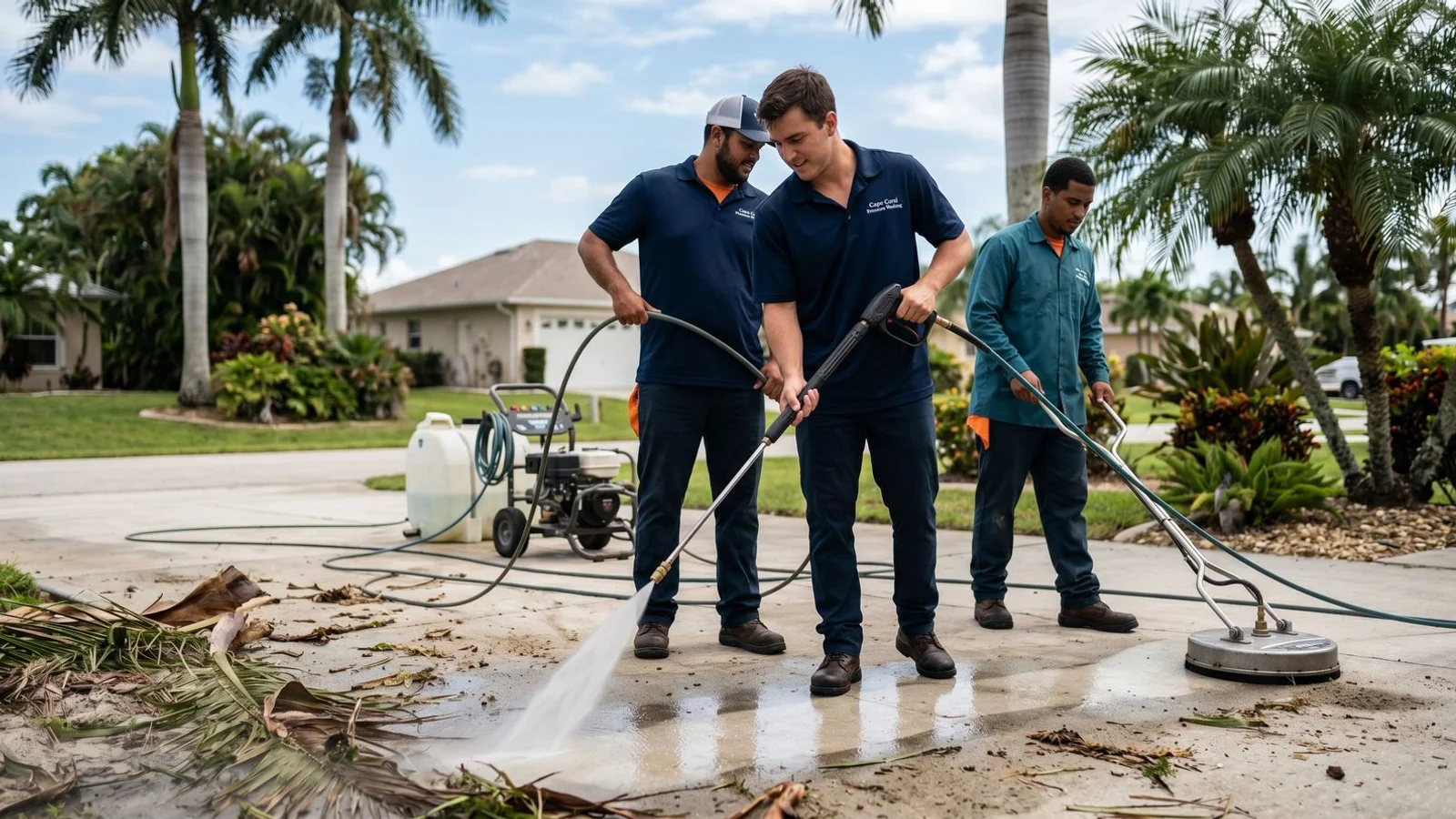
Driveway, walkways, lanai concrete, and pool deck come third because they tolerate the storm debris longest. The exception: silt on lanais and pool decks where the screen cage trapped storm debris. That should be cleared within the first week to prevent staining and biological growth.
Lanai and Pool Cage — Special Care
Screen enclosures in named storms take debris impact and salt spray. Before cleaning:
- Inspect for damaged screens, bent framing, broken spline
- Replace any compromised sections before cleaning (otherwise cleaning makes the damage worse)
- Note any structural concerns for insurance documentation
Once cleared, the pool deck and lanai cleaning method works the same as standard maintenance — soft wash chemistry, no pressure on the screens, pool filtration protected.
Insurance Documentation
Most homeowners insurance policies include some allowance for storm cleanup. The keys to a successful claim:
- Before photos: dated, showing the storm damage and debris
- Itemized invoices: every service line broken out separately
- Crew documentation: name of the crew lead, date and time of work, COI on file
- After photos: matching the before angles
- Receipts: material costs (cleaning chemistry, disposal fees) listed if applicable
We document all of this on every post-storm job and can provide a documentation package for your adjuster.
What to Skip
Some post-storm cleanup work is best left to specialty contractors:
- Tree removal: arborist or tree service
- Roof tarping or temporary repair: roofing contractor
- Standing water inside the home: water mitigation specialist (within 48 hours to prevent mold)
- Damaged windows or doors: glass and window specialists
- Pool water replacement / treatment: pool service
Pressure washing and exterior cleaning is one piece of a larger post-storm response. Get the structural and water mitigation handled first.
Pre-Booking the Spring Window
If you’re reading this in May (pre-season), the best post-storm strategy is preventive: book a pre-hurricane cleaning between May 15 and June 1. A clean roof, siding, and lanai going into the season is the foundation that lets post-storm cleanup focus on debris removal rather than full cleaning. See our pre-hurricane checklist post for the full pre-season prep.
After-Storm Booking
Post-storm scheduling moves fast. Most crews are at capacity within 24-48 hours of a named storm landing. We prioritize:
- Recurring contract clients (commercial)
- Pre-booked post-storm slots
- Standard residential in order received
Get in our queue early in storm season — even before a storm forms — and we can call you within 48 hours of clearance to clean rather than at the bottom of the post-storm backlog.
Stay safe out there. The homes that come through the best are the ones that started clean and got cleaned again quickly.