How to Remove Oil and Tire Stains from a Concrete Driveway
Concrete stains need pre-treat dwell time before pressure washing. The process for oil, tire marks, rust, and ground-in dirt.
The hardest part of driveway cleaning isn’t the general grime — it’s the specific stains. Oil drips under where you park. Tire marks from delivery trucks. Brake dust from years of driving in and out. Each needs a specific approach to lift properly. Here’s what works.
Oil Stains
Fresh oil sits on the concrete surface. Old oil has penetrated the concrete pores, sometimes to a depth of several millimeters. The treatment differs.
Fresh oil (under 30 days):
- Apply degreaser, let dwell 5-10 minutes
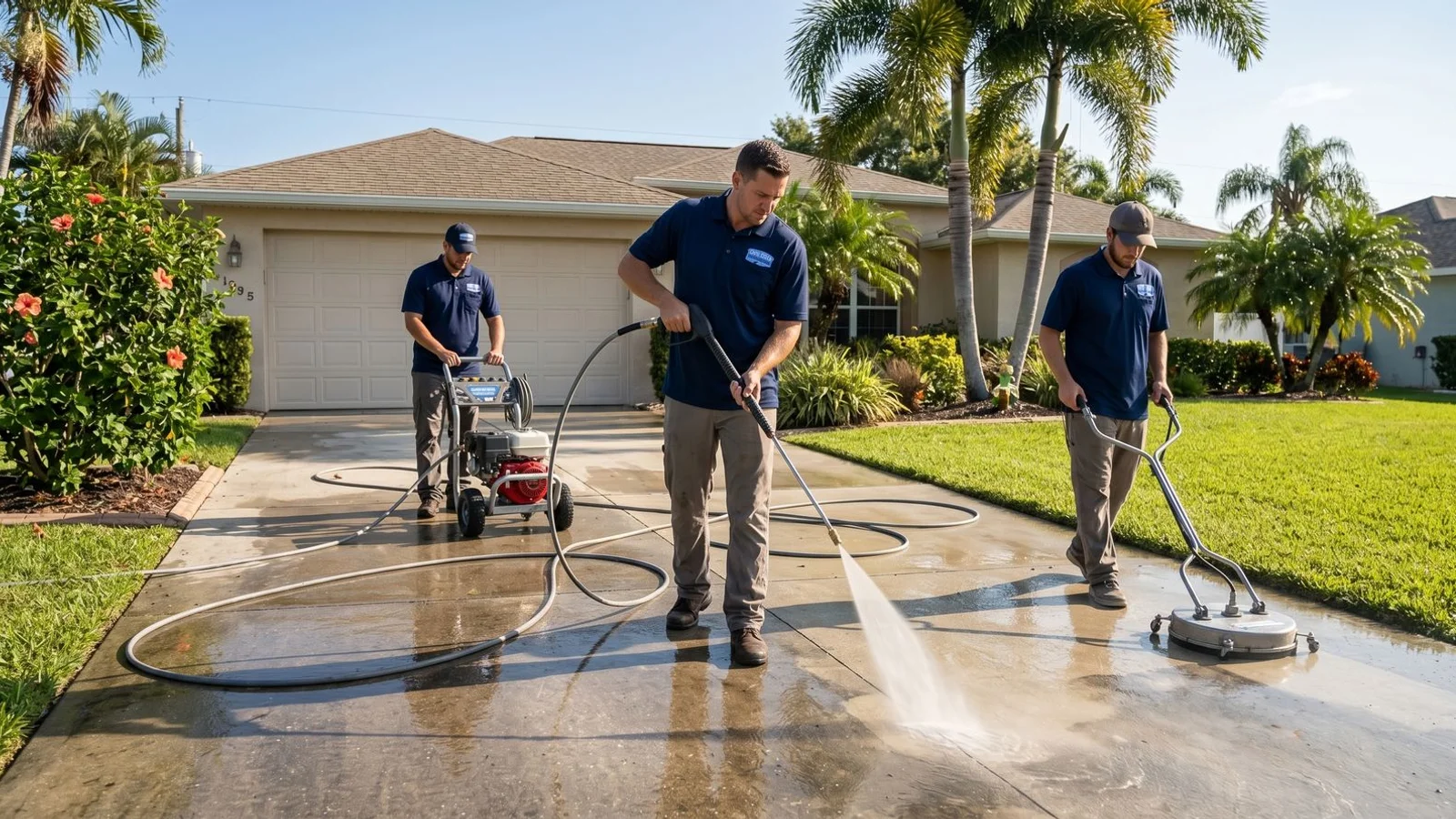
- Pressure wash with rotary surface cleaner
- Usually lifts cleanly
Moderate oil (30 days to 2 years):
- Apply degreaser, longer dwell (10-15 minutes)
- May require second application
- Pressure wash with rotary surface cleaner
- Some shadow may remain
Old oil (2+ years):
- Multiple degreaser applications
- Extended dwell time (20+ minutes per application)
- May leave permanent shadow regardless of effort
- Honest expectation: 60-80% improvement, not complete removal
The reason old oil is harder: the oil has saturated the porous concrete, sometimes bonded with calcium in the matrix. No surface treatment fully reverses deep penetration.
Tire Marks
Black streaks from tires (especially diesel delivery trucks and aggressive braking) leave rubber residue on the surface. Treatment:
- Apply degreaser or specialized tire-mark remover
- Brief dwell (5 minutes)
- Pressure wash with rotary surface cleaner
- Most tire marks lift well
Older tire marks (years of accumulation in the same spot) may behave like old oil — partial lift, shadow remains.
Brake Dust
The fine dark powder that accumulates around the front edges of parking spots. Lifts easily:
- Pressure wash with rotary surface cleaner
- Usually no pre-treatment needed
- Cleans with the rest of the driveway
What About Rust Stains?
Rust stains (orange or brown) from irrigation overspray, fertilizer, or metal furniture are a completely different category. Pressure washing alone:
- Does not lift rust (it’s a chemical bond, not a surface deposit)
- Often makes it worse by etching the concrete
- Embeds iron deeper into porosity
Rust requires acidic chemistry — oxalic acid or F9 BARC — applied separately from standard driveway cleaning. See Why Pressure Washing Cannot Remove Rust Stains and our dedicated Rust Stain Removal service.
Common DIY Mistakes
Things we see homeowners try that don’t work:
Bleach — lightens oil stains visually but doesn’t lift them. The bleach evaporates and the oil is still there.
Cat litter or sand — absorbs surface oil but doesn’t address penetrated oil. Useful for cleanup of fresh spills before they soak in; useless for established stains.
Wire brush scrubbing — abrades concrete surface, exposes more porosity, makes the underlying staining more visible.
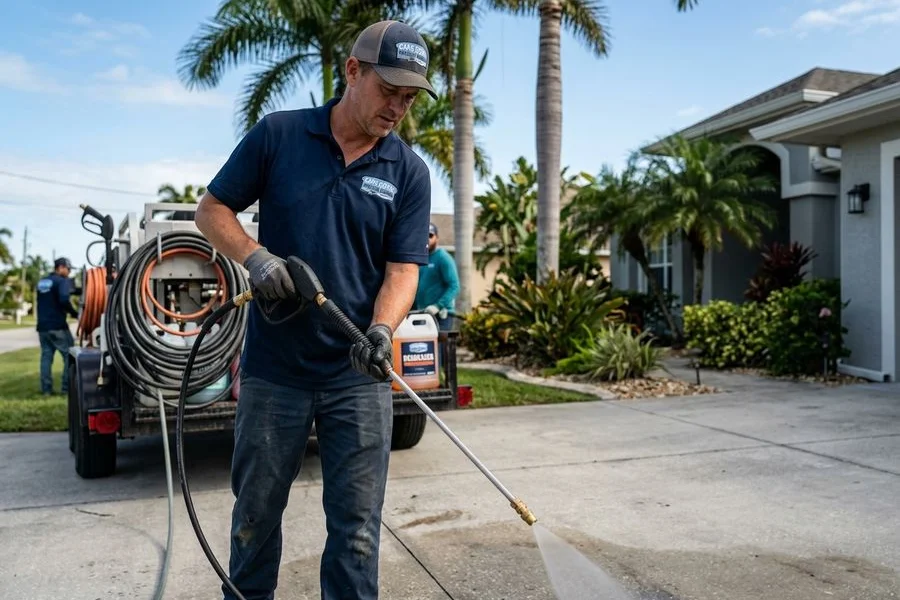
Pressure-only washing — without degreaser pre-treatment, pressure alone usually leaves shadow. Some surface oil lifts; most penetrated oil doesn’t.
Acid wash — too aggressive for most oil situations. The acid etches concrete without effectively lifting oil. Reserved for specific applications (rust extraction).
Our Method for Stained Driveways
Standard process when stains are present:
- Site walk — identify each stain type, photograph for before/after comparison
- Pre-treat each stain with appropriate chemistry (degreaser for oil, tire-mark remover, etc.)
- Dwell time (5-20 minutes per chemistry)
- Rotary surface clean the full driveway (catches general grime and applies even cleaning across treated stains)
- Spot-wand any remaining stain shadows
- Walkthrough with you to confirm result
Setting Honest Expectations
For old oil stains specifically, we tell every client upfront what to expect. Fresh oil = full lift expected. Older oil = significant improvement expected, possible permanent shadow. Decades-old saturated stains = best we can do, but may not be complete.
This is the kind of “the work matches the quote” approach that’s worth more than a “we’ll get everything out” promise that doesn’t pan out.
Preventing Future Stains
Concrete sealing prevents most future stain penetration. After driveway cleaning, an optional concrete sealer:
- Creates hydrophobic barrier
- Resists oil penetration
- Slows biological growth
- Lasts 3-5 years in SWFL conditions
A typical 600 sq ft driveway sealing adds $200-$400 to the cleaning visit and saves money on future stain removal work.
Get a Quote
For driveway cleaning with specific stain concerns, request a free quote — describe the stains in the message field and we’ll address them in the proposal. See Driveway & Concrete Cleaning for the full service.
Related Service
Driveway & Concrete Cleaning →High-pressure rotary surface cleaning that strips oil, tire marks, mold, and ground-in dirt from driveways, walkways, patios, and concrete pool decks.