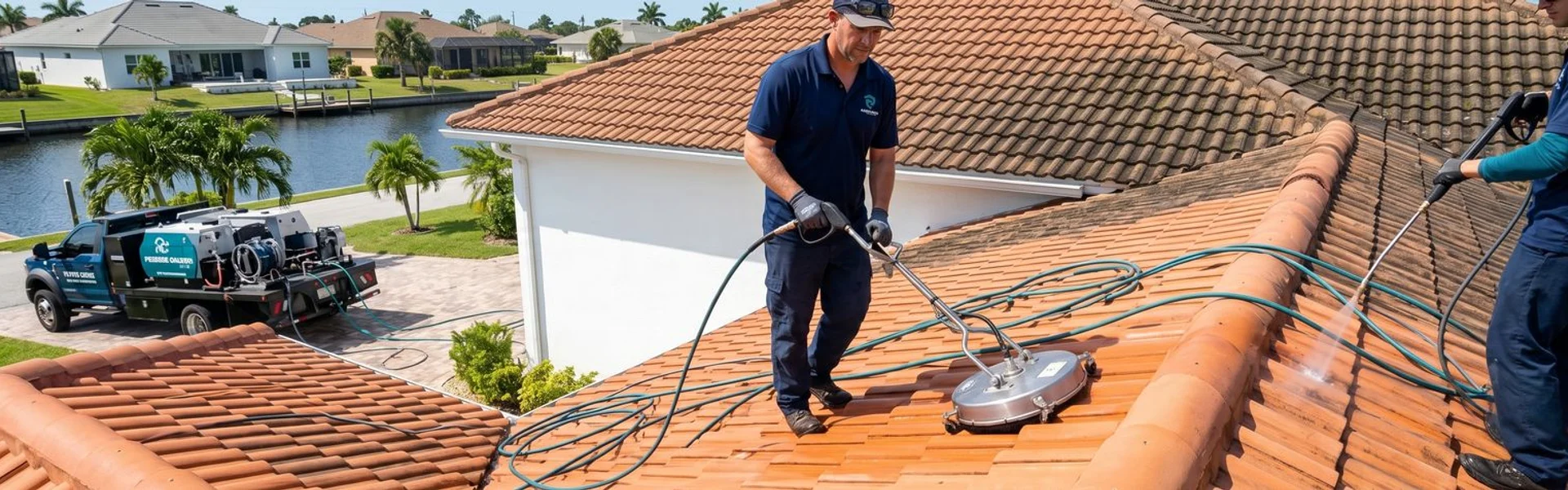
Removing Algae and Mildew from Florida Fences
SWFL humidity grows fence algae fast. Biocide-led soft wash removes without splintering wood or oxidizing aluminum.
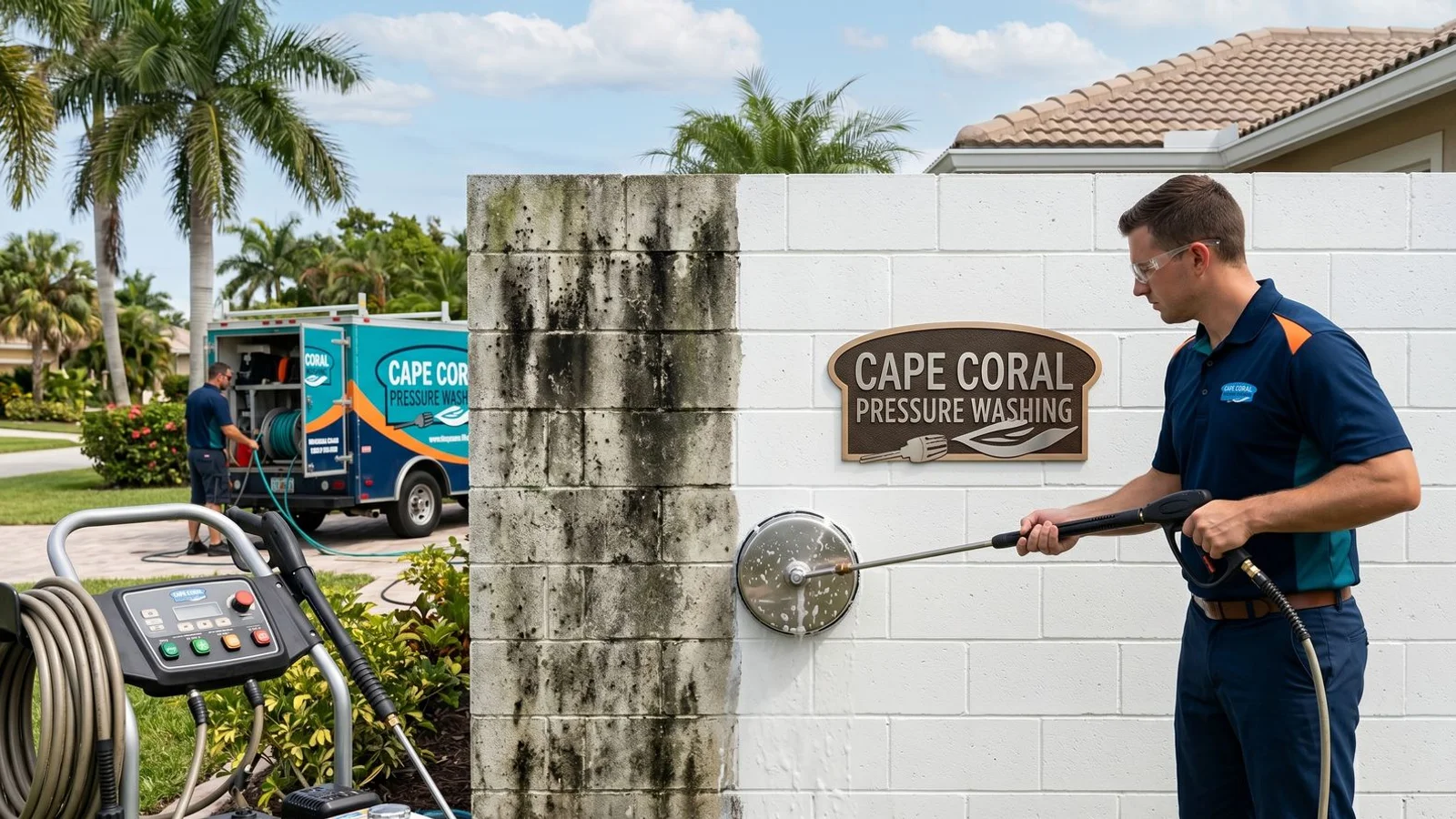
Algae and mildew on fences are the most visible exterior aging signs in SWFL. A fence covered in green or black biological growth tells the neighborhood “this property isn’t maintained” — even if the rest of the home is pristine. Here’s how to remove it and what to expect.
Why SWFL Fences Grow Algae So Fast
Three SWFL-specific conditions accelerate fence algae:
Humidity
Year-round 70-90% humidity means surfaces stay damp longer between rains. Fences in any shaded position (north sides, behind trees, in pool enclosure shadow) hold moisture continuously.
Irrigation Overspray
Sprinkler heads that hit lower fence boards create chronic damp conditions. Many SWFL fences show clear “irrigation rings” of heavy algae growth matching sprinkler patterns.
Foliage Contact
Plants, vines, and shrubs touching the fence trap moisture against the wood or vinyl and accelerate biological growth. The contact also blocks airflow that would otherwise help the fence dry.
What Algae Does to Fences
Untreated algae doesn’t just look bad:
- Holds moisture against wood, accelerating rot
- Etches vinyl surface over years
- Oxidizes aluminum in contact zones
- Stains beyond cleaning if left for 3+ years
- Damages stain or sealer finish on wood
A fence cleaned annually maintains structural integrity. A fence left for 5+ years often needs replacement of bottom boards or full sections.
How Biocide Works
Standard rinsing doesn’t kill algae spores — only removes the visible surface layer. The spores survive in the substrate and regrow within months.
Our biocide chemistry kills the spores at the cellular level:
- Pre-wet adjacent landscaping to protect plants from runoff
- Apply soft wash biocide to the fence at low pressure
- Dwell 5-10 minutes for chemistry to penetrate
- Low-pressure rinse lifts dead organisms
- Neutralizer on adjacent landscaping
The result: algae killed at the root, fence cleaned, regrowth delayed to 12-18 months instead of 3-6 months.
Why Not Just Pressure Wash?
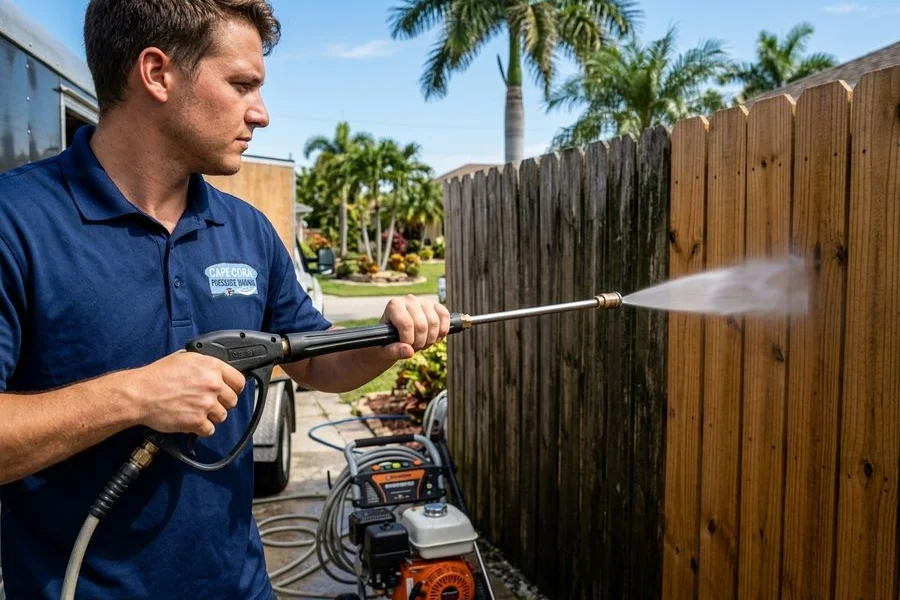
Pressure washing fences (especially wood) causes specific damage:
- Splinters wood — high PSI raises grain
- Strips stain or sealer — pressure removes coatings
- Pushes water under vinyl seams — creates hidden moisture
- Oxidizes aluminum surface — abrades powder coat
Pressure washing also doesn’t kill algae spores — so the cleaning is less effective AND damages the fence.
What You See After Cleaning
A properly cleaned SWFL fence:
- Original color visible (wood grain, vinyl tone, aluminum sheen)
- No green or black biological growth
- Surface uniformly clean
- Wood ready for stain (after 24-48 hour dry)
- 12-18 months until visible regrowth begins
Cadence Recommendation
For most SWFL fences:
- Standard: annual cleaning
- Heavy canopy or irrigation: every 6-9 months
- Sun-exposed all sides: every 18 months
- Coastal aluminum: twice yearly (salt rinse)
Best Time of Year
- Late spring (April-May): prime window. Cleans winter buildup before summer growth.
- Early fall (October-November): second window. Clears summer growth.
Avoid mid-summer when possible — humidity makes drying slower for stain follow-up.
Combine with Stain Application
If your wood fence needs re-staining (typically every 2-3 years in SWFL), the cleaning visit is the natural prep step:
- Clean fence (Day 1)
- Allow 24-48 hours to dry
- Stain or sealer application (Day 3 or 4)
Some operators (we are one) coordinate with stain contractors for the full cycle. The combined timing maximizes stain bond and longevity.
Bundle with Other Services
Most fence cleanings bundle with:
- House wash (most common — same chemistry, same crew)
- Driveway cleaning (efficient combined visit)
- Full exterior property package
Typical bundle savings 15-25% vs separate visits.
Get a Quote
For fence cleaning in Cape Coral and SWFL, request a free quote — describe your fence material and approximate linear footage. See Fence Pressure Washing for the full service.
Related Service
Fence Pressure Washing →Material-specific fence cleaning for wood, vinyl, and aluminum that removes algae, mildew, and grime without splintering or oxidation.