How to Clean Wood, Vinyl, and Aluminum Fences Without Damage
Wood needs soft wash to preserve grain. Vinyl needs chemistry. Aluminum needs oxidation neutralizer. Each explained.
Any property manager in Southwest Florida knows exactly how fast the climate eats exterior surfaces. Intense UV rays, daily humidity, and heavy spring pollen create the perfect storm for biological growth. A barrier sits exposed to sun, rain, and irrigation moisture without the protection of a roof overhang.
Our crews see new installations turn green or gray within just 18 months. The 2026 updates to the Florida Building Code remind property owners about wind load pressures. Weak, rotting posts fail quickly during hurricane season.
We are going to break down the exact protocols to clean wood, vinyl, metal fence materials safely. You will learn the specific water pressures required to avoid damage.
Let’s look at the data and explore a few practical ways to respond.
Wood Fences
Wood remains the most common fencing material across Cape Coral and the surrounding areas. Cedar, pine, and treated lumber all behave similarly during the washing process.
What Wood Faces in SWFL
Florida sun breaks down the natural lignin in wood fibers extremely fast. This intense UV bleaching turns a beautiful new pine installation a dull, chalky gray in under two years.
Our local environment also provides constant moisture. Irrigation systems spray the bottom rails daily, while the shaded sides of the property cultivate thick green algae.
You will also see a thick yellow film coating the surface during the heavy March and April 2026 pollen season. Over the years, unchecked moisture and biological matter invite insect damage and structural rot.
- UV bleaching (destroys wood lignin quickly)
- Algae growth on shaded panels
- Mildew on bottom rails from irrigation
- Heavy oak and pine pollen during spring
- Insect damage and structural rot over time
Our Method
We utilize a low-pressure soft wash system for all lumber. The pressure stays strictly between 500 and 800 PSI. This gentle approach cleans the surface without splintering the delicate grain.
Our technicians apply a targeted mildew biocide to kill algae and mold at the root. A specialized surfactant then helps the chemistry penetrate the wood fibers. The solution dwells for several minutes to ensure maximum effectiveness.
We finish the process with a gentle rinse to lift away the dead organisms.
What to Avoid
Never use traditional high-pressure washing on lumber. Blasting a pine board with 2,000 PSI raises the grain and creates dangerous splinters.
Our industry experts strongly advise against wire brushes. Metal bristles abrade the surface and open the wood to even more moisture damage. Harsh, aggressive chemistry over-bleaches the material and degrades the structural integrity.
You should never clean a wet fence, as it offers zero benefits and drastically increases the necessary drying time.
After Cleaning
Wood requires 24 to 48 hours of drying time after a professional wash. The exact time depends on direct sun exposure and humidity levels.
Our team often recommends applying a high-quality stain or clear sealer once the boards are completely dry. Many homeowners choose this route to secure longer-term protection against the harsh coastal environment. The stain acts as a barrier against the intense Florida sun.
Vinyl Fences
Vinyl continues to gain popularity in Southwest Florida for its low-maintenance appeal. Modern PVC panels contain UV stabilizers to handle the relentless sunshine.
What Vinyl Faces in SWFL
Even premium vinyl falls victim to biological growth in our humid subtropical climate. The north-facing panels often develop thick layers of green algae.
Our technicians frequently treat black mildew spreading along the bottom rails. Older plastics often exhibit a white, chalky residue caused by years of UV exposure.
You will also notice the material yellowing as sticky tree pollen and algae combine on the surface.
- Green algae on north-facing sides
- Black mildew near wet bottom rails
- White chalking from heavy UV exposure
- Yellowing caused by algae and pollen layers
Our Method
We implement a chemistry-led soft wash specifically calibrated for PVC materials. The specific fence pressure washing method relies on chemistry to dissolve organic stains rather than brute force. The application process works from the bottom up to prevent streaking.
A low-pressure rinse, kept safely under 1,200 PSI, washes away the debris from the top down.
Our biocide treatment ensures the mildew dies completely. This extra step prevents rapid regrowth in the wet summer months. The results last significantly longer than a simple water wash.
What to Avoid
High-pressure water is the fastest way to ruin a PVC installation. Exceeding 1,500 PSI creates permanent, visible spray-pattern marks on the plastic.
Our crews never use abrasive cleaners or strong solvents. Harsh chemicals degrade the plastic stabilizers and cause the material to become brittle over time.
You must also avoid pointing a power washer perpendicular to the seams. This angle forces water directly behind the panels and into the hollow posts.
Results
A proper soft wash returns dirty PVC to a near-original, bright appearance. The surface remains smooth and free of permanent wand marks.
Our clients enjoy vibrant colors for years between cleanings with proper ongoing maintenance. The smooth surface repels dirt effectively. A quick annual inspection keeps everything looking pristine.
Aluminum Fences
Marine-grade aluminum is a staple on coastal properties in neighborhoods like Pelican and Surfside. Picket and ornamental metal require a very different care strategy than porous materials.
What Aluminum Faces in SWFL
Salt air acts as an aggressive catalyst for corrosion on any metal surface. Ocean-borne salts draw moisture and break down protective powder coatings.
Our coastal properties also battle a white, chalky oxidation that rubs off on your hands. Shaded sections accumulate algae quickly. Intricate decorative patterns trap dirt and hard water stains all year.
- White oxidation (chalky residue on the finish)
- Aggressive salt corrosion near the coast
- Algae growth on shaded panels
- Stain accumulation in decorative joints
Our Method
We start by applying an oxidation neutralizer to break down the chalky residue safely. This restores the clean look of the factory finish. The soft wash chemistry gently dissolves algae and mildew without harming the metal.
A controlled, low-pressure rinse clears away the remaining debris.
Our coastal clients receive an additional fresh water flush. This removes stubborn salt deposits completely.
What to Avoid
Heavy pressure forces water into joints and abrades the protective coating. Scratched metal exposes the raw aluminum to accelerated oxidation.
Our training requires technicians to avoid acidic cleaners completely. Harsh acids easily etch the anodized coating and ruin the aesthetic appeal.
You must never use steel wool or abrasive scrubbing pads on these surfaces.
After Cleaning
A clean metal installation should display a uniform appearance. You will see an even sheen with no chalky residue or white film.
Our local experts note that powder-coated aluminum lasts up to 20 years. Some older installations benefit from periodic professional re-coating every 5 to 10 years to maintain that factory look. The correct maintenance schedule saves thousands in replacement costs.
Mixed Fence Types: Clean Wood, Vinyl, Metal Fence Safely
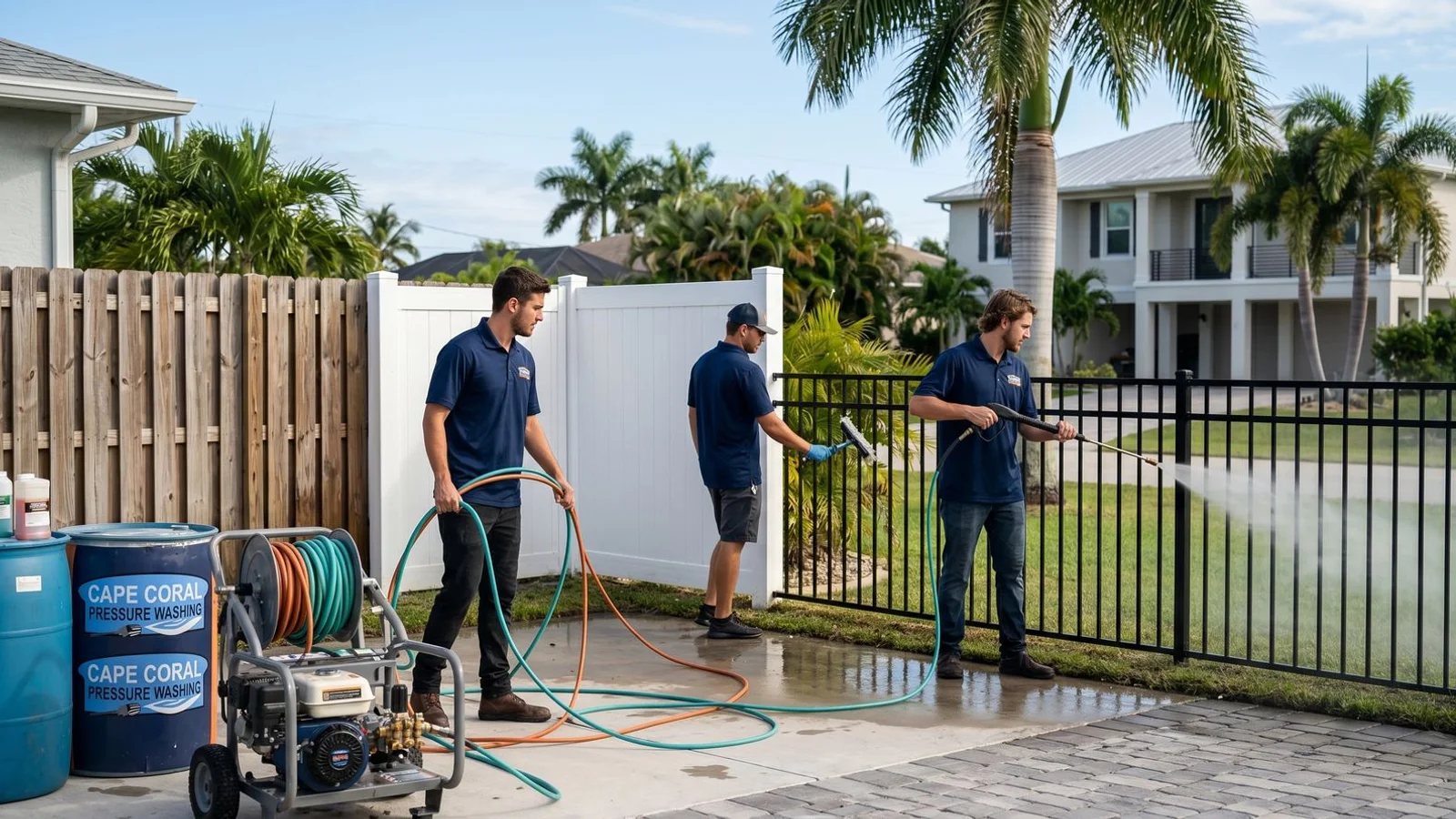
Many properties feature multiple materials on a single lot. You might have a wooden privacy barrier in the back, a pool-code compliant metal enclosure, and a decorative PVC entry.
Our approach treats each material with its specific required protocol during the same visit. The technicians adjust the chemistry and the equipment pressure for each distinct section. This localized strategy ensures every inch of the perimeter receives the correct care.
We compiled a quick reference guide to show the exact requirements for each surface. The table below outlines the ideal pressure and chemistry for common materials.
| Fence Material | Ideal PSI Range | Primary Cleaning Agent | Biggest Risk Factor |
|---|---|---|---|
| Pine / Cedar Wood | 500 - 800 PSI | Mildew biocide & surfactant | Splintering from high pressure |
| Vinyl / PVC | Under 1,200 PSI | Alkaline soft wash | Warping or blown-out seams |
| Marine Aluminum | Under 500 PSI | Oxidation neutralizer | Acid etching on powder coat |
Common SWFL Fence Issues
Certain environmental challenges affect every exterior surface in our region. Understanding these threats helps you plan better maintenance cycles.
Our seasonal weather patterns dictate the most common problems you will face. The intense heat and daily rain create a unique breeding ground for grime. Proximity to the Gulf of Mexico adds aggressive salt spray into the mix. Professional fence cleaning SWFL residents trust requires knowing how to handle these specific regional threats.
- Bottom rail mold: Daily irrigation overspray keeps the bottom six inches permanently wet, requiring a chemistry-led cleaning to dissolve the root structure.
- Algae on shaded sections: North and east-facing sides lack the direct sunlight needed to dry out, making them prime real estate for green algae.
- Pollen film: Massive oak and pine blooms leave a sticky yellow residue every spring.
- Storm debris: Summer hurricanes blow wet leaves and organic matter against the baseboards, accelerating rot.
- Salt accumulation: Coastal homes suffer from airborne salt spray and require an additional fresh water rinse cycle.
Cadence
Most exterior barriers in our climate require professional attention once a year. Regular maintenance prevents organic matter from causing permanent structural damage.
Our standard recommendation varies slightly based on your specific location and material. Fully sun-exposed PVC might stretch to 18 months before needing service. Beachfront metal needs more frequent salt removal to prevent pitting.
- Wood: Annual washing plus a fresh stain application every 2 to 3 years.
- Vinyl: Annual washing (sometimes 18 months for fully sun-exposed panels).
- Aluminum: Annual washing (or twice yearly for coastal salt-air exposure).
You can review our guide on Removing Algae from SWFL Fencing for a deeper explanation of this specific timeline.
Bundle Pricing
Combining services is the most cost-effective way to maintain your entire property. Treating multiple surfaces on the same day reduces setup time and travel costs.
Our most popular bundle pairs the perimeter wash with a complete house exterior cleaning. Booking these together saves immense time. The entire property looks brand new in a single afternoon.
- House wash (most common bundle)
- Driveway cleaning
- Full property exterior package
Property managers and homeowners typically see bundle savings of 15% to 25% compared to booking separate visits.
Get a Quote
Protecting your property requires consistent, professional care matched to the local environment. Using the correct pressure and chemistry prevents expensive damage and keeps your curb appeal high. When you need to clean wood, vinyl, metal fence panels, a quick phone call gets the process started.
Our team is ready to evaluate your specific layout and recommend the exact treatment plan you need. An experienced technician will assess the material and outline the exact steps required. You receive a transparent breakdown of the costs upfront.
For professional service in Cape Coral and the surrounding areas, request a free quote. Please describe your material type and approximate length in the message field. You can visit our Fence Pressure Washing page to learn more about the complete service details.
Related Service
Fence Pressure Washing →Material-specific fence cleaning for wood, vinyl, and aluminum that removes algae, mildew, and grime without splintering or oxidation.